off page optimization

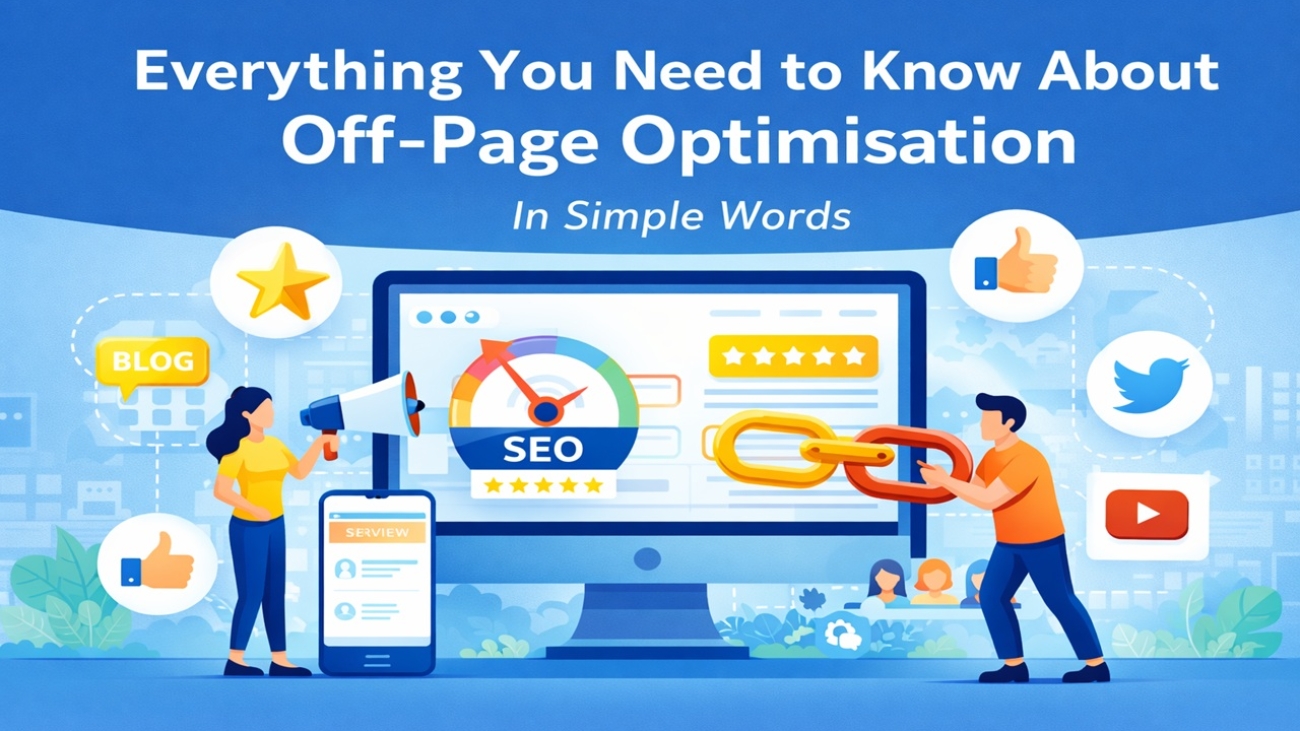
Everything You Need to Know About Off-Page Optimisation in Simple Words

Getting your website to rank on search engines isn’t just about what’s on the page. How the rest of the internet interacts with your site plays a huge role, too. It involves more than content and keywords; it’s about earning recognition from beyond your own platform.

That’s when off-page optimisation becomes important. It focuses on building trust, relevance, and authority through external signals like backlinks, mentions, shares, and reviews. When credible sources point to your site, it shows search engines that your content is valuable and reliable. This can help improve your rankings and boost your visibility.

Focusing on efforts beyond your website connects your content to a wider digital network. The more trusted sources refer to your pages, the more established your online reputation becomes. Strong on-page content is important, but real success also depends on how others interact with your site across the web.

What Does Off-Page Optimisation Really Mean?

Off-page optimisation includes all the actions you take outside of your own website to increase your position in search engine results. Unlike on-page SEO, which focuses on internal elements like metadata, keyword usage, and content structure, off-page strategies depend heavily on how other online entities interact with your content. In simple terms, it’s about how the rest of the internet perceives your website.

When your site is mentioned on another blog, linked from a reputable directory, or shared across social media, it builds authority and trust in the eyes of both users and search engines. These external validations play a huge role in shaping your domain’s digital reputation. Search engines interpret such engagements as proof that your content is valuable, relevant, and reliable.

The strength of your off-page profile depends on a mix of quality and consistency. Even small activities, such as being listed in local business directories or regularly contributing to industry forums, accumulate over time and can help you build a stronger foundation for search rankings.

Why Backlinks Matter in Off-Page SEO

Backlinks are links from one website to another, and they serve as the most influential signal in off-page optimisation. When your content is cited by another website, it acts as a vote of confidence. The more reputable the linking site, the more valuable that vote becomes. Backlinks not only drive referral traffic but also tell search engines that your site is worth ranking.

Backlinks come in various types, such as dofollow and nofollow. Dofollow links pass on SEO value, while nofollow links mainly drive traffic but don’t influence rankings as much. However, even nofollow links can benefit your overall visibility if placed on high-traffic, relevant platforms. Quality matters far more than quantity; a few strong backlinks from trusted sites often outperform dozens of weak ones.

To build a strong backlink profile, your content must be link-worthy. That means it should offer unique insights, useful tools, or highly specific information that others would find valuable to share. Natural backlink growth comes when your content is genuinely helpful, not just created for the sake of SEO.

Guest Posting as a Strategic Link Building Method

Guest posting involves writing articles for other websites in your industry and including a link back to your own site. It serves multiple purposes: building authority, tapping into new audiences, and securing high-quality backlinks. A well-placed guest article can significantly improve your site’s trust signals and referral traffic.

This strategy works best when you publish on platforms with high domain authority and active audiences. The goal is not just to earn a backlink but to deliver content that adds value to the readers of that site. Over time, repeated guest contributions can position your brand as a recognised name in your niche, leading to more organic linking opportunities.

Besides helping with off-page optimisation, guest posts can lead to collaborations, networking opportunities, and even media coverage. A well-researched and timely guest post can be the foundation for long-term digital partnerships and increased visibility across relevant spaces.

Using Social Media for Indirect SEO Gains

While social shares are not direct ranking signals, social media still plays a vital role in off-page optimisation. Platforms like Instagram, Twitter, LinkedIn, and Facebook allow you to distribute content, interact with followers, and amplify your reach beyond traditional search traffic. The broader your content’s exposure, the more likely it is to attract organic backlinks.

Sharing high-value content consistently helps create a loyal audience. These followers may eventually reference or link to your content on their own sites or platforms. Additionally, search engines do index social profiles and posts, which indirectly contribute to visibility and content distribution.

Strong engagement, likes, shares, and comments indicate that your content resonates with people. This validation encourages further exposure and opens up additional link-building opportunities. Social media also offers real-time communication, allowing you to engage directly with your audience and gather feedback that improves future content.

Harnessing Forums and Online Communities

Participating in forums related to your niche gives you a chance to share knowledge, answer questions, and drop relevant links where appropriate. This method not only drives traffic but also strengthens off-page optimisation by increasing your brand’s presence across multiple platforms.

When engaging on forums, avoid spammy tactics. Instead, focus on genuine discussions. If someone asks a question that your content answers, it’s perfectly acceptable to provide a helpful explanation and link back to the resource. Over time, such contributions build credibility and visibility.

Communities like Reddit, Stack Exchange, and niche-specific groups on Facebook and LinkedIn offer direct access to people interested in your domain. Engaging actively and respectfully positions your site as a trusted resource, which often leads to mentions and natural link-building.

Influencer Collaboration and Content Amplification

Partnering with influencers can give your content a considerable boost. Influencers come with loyal audiences who value their suggestions. If they mention your brand or link to your website, it sends a strong signal of trust. This also enhances traffic, engagement, and search visibility.

Not all influencer partnerships need to be paid. Many micro-influencers are open to collaborations in exchange for quality content, shared value, or product features. What matters most is alignment; ensure the influencer’s content and audience are relevant to your niche.

Directory Listings and Business Citations

Submitting your website to trustworthy directories improves your brand’s online presence and search credibility. Business directories such as Justdial or IndiaMART allow you to list accurate information like name, address, and website URL. These citations help Google verify your legitimacy and rank you better in local searches.

Consistency is key. All listings should reflect identical information across platforms to avoid confusion. These listings not only increase your digital footprint but also drive qualified leads to your site.

While directory submissions used to be abused for backlinks, today’s focus is more on quality. Choose directories with real user engagement and relevance to your industry. These listings also contribute to off-page optimisation by building external credibility.

Review Platforms and Reputation Signals

Customer reviews are another vital part of your off-page SEO. Reviews on platforms like Google My Business, Trustpilot, and product directories influence user perception and indirectly affect rankings. Positive reviews show that real users find your services valuable.

Encouraging satisfied customers to leave reviews helps maintain a strong online reputation. Make it a habit to respond to reviews, both positive and negative, to show that you value feedback. This not only builds trust but also improves engagement.

Search engines notice active profiles and consistent reviews. They take them as signals of business legitimacy and user satisfaction, both of which play a part in how your site ranks over time.

Engaging in Q&A Platforms for Brand Awareness

Q&A websites like Quora and Stack Overflow allow you to demonstrate expertise by answering real questions. You can share helpful insights and, where suitable, include links to relevant content from your website. These platforms have long lifespans for answers, meaning your posts can generate traffic for months.

The key is to focus on value. Don’t drop links for the sake of it. Instead, provide detailed answers that genuinely help readers. If your content matches their query, adding a link feels natural and useful.

A well-maintained profile on such platforms not only enhances credibility but also supports off-page optimisation through relevant backlinks and increased content visibility.

Video Content as an Off-Page Asset

Videos hosted on platforms like YouTube or Vimeo can be powerful off-page tools. If your videos solve problems, offer tutorials, or present product demos, viewers are more likely to engage and share them. This boosts visibility and opens backlinking opportunities.

Include links to relevant pages in the video description to direct viewers back to your site. Also, make use of visual branding in your videos to increase recall. The content should be informative, not just promotional.

Broken Link Building as a Backlink Opportunity

Broken link building offers a smart and practical way to earn quality backlinks. The idea is to find web pages with links that no longer work and suggest your own content to replace them. This helps the site owner improve user experience while giving your page a new backlink.

To start, use trusted SEO tools to scan blogs, resource pages, or directories in your niche for broken links. Focus on websites that align closely with your content topics. Once you identify a broken link, reach out to the site owner with a brief and polite message. Offer your page as a replacement only if it clearly matches the context of the missing content.

Your content should be relevant, useful, and worthy of being shared. If it truly serves the same purpose as the broken resource, there’s a good chance the owner will add your link. This approach builds credibility while helping others keep their sites updated and valuable.

Content Syndication for Wider Reach

Republishing your content on third-party platforms helps increase visibility without duplicating effort. Websites like Medium, LinkedIn, and News aggregators allow you to post the same article or a summary with a link to the original source.

To protect your original post’s SEO value, always use a canonical tag or mention the source link clearly. This helps search engines credit your site with the original content and still benefit from the extra exposure.

Syndication adds new paths for users to discover your content, making it a useful part of your off-page plan, especially for evergreen articles that continue to deliver value over time.

What Consistent Off-Page SEO Delivers Over Time

Off-page optimisation is a long-term process, but the results are lasting. Unlike short-term strategies that focus on immediate traffic spikes, off-page efforts build credibility and trust that hold value even during algorithm updates. As your backlink profile grows, so does your authority in search results.

The key to successful off-page SEO is staying consistent with outreach, engagement, and high-quality content. Don’t rely on shortcuts or automated tools. Instead, build real relationships, contribute meaningfully to communities, and create resources worth sharing.

Every external signal, from a shared link to a five-star review, adds to your digital reputation. With time, these efforts compound and lead to stronger rankings, wider visibility, and more sustainable traffic for your site.

FAQs on Off-Page SEO

Which is an example of off-page SEO?

An example of off-page SEO is earning a backlink from a high-authority blog that links to your article. This link acts as a vote of confidence for your content, helping search engines understand its credibility and relevance. Other examples include social media shares, brand mentions, online reviews, and guest posts on external websites.

Is off-page SEO still effective for SEO?

Yes, off-page SEO is still highly effective. It remains a key factor in how search engines evaluate website trust and authority. Quality backlinks, user engagement, and third-party references all contribute to better search visibility. While on-page SEO focuses on structure and content, off-page signals help search engines understand how others value your site.

How to measure off-page SEO?

You can measure off-page SEO using these key metrics:

  • Backlink profile: Track the number, quality, and relevance of backlinks through tools like Ahrefs, Moz, or Google Search Console.
  • Domain authority (DA) and Page authority (PA): These scores reflect the strength of your site’s backlink profile.
  • Referral traffic: Check how much traffic comes from external sources using Google Analytics.
  • Brand mentions and shares: Monitor social signals and unlinked brand mentions with tools like Brand24 or BuzzSumo.
Different Types of SEO Explained

Different Types of SEO Explained: On-Page, Off-Page, and Technical

Search Engine Optimization, or SEO, has become the backbone of online visibility for businesses today. Every website, whether a small startup or a big enterprise, needs SEO to reach the right audience.

When we talk about SEO, most people think about keywords and rankings, but there’s much more under the hood. Understanding the types of SEO is essential to creating a strategy that drives results.

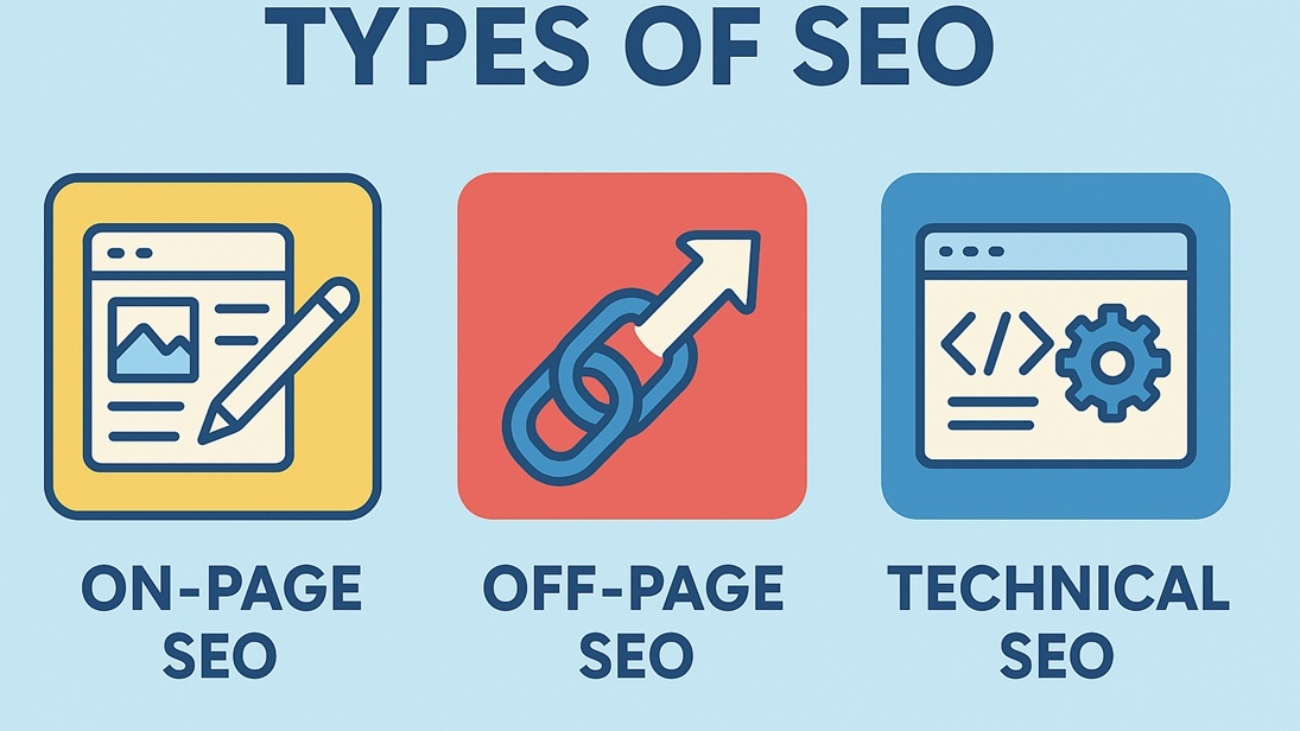
This guide takes you through the three main categories of SEO: On-Page, Off-Page, and Technical, while also touching on specialised SEO approaches and how they work together to strengthen your website’s overall performance.

Let’s dive in and break down everything you need to know.

What Is On-Page SEO?

On-Page SEO refers to the optimization of elements within your website to make it more visible to search engines. This is often the first step in any SEO strategy because it lays the foundation for rankings. For beginners wondering how many types of keywords in SEO are essential, On-Page SEO is where keyword research and implementation matter the most.

Key Components of On-Page SEO

On-Page SEO is all about optimizing the elements within your website to make it both user-friendly and search engine-friendly. While Off-Page SEO builds authority and Technical SEO ensures crawlability, On-Page SEO is where you directly control the quality and relevance of your content.

Here’s a deeper look at its core components:

1. Keyword Optimization

Keywords remain the backbone of On-Page SEO. Using the right keywords ensures your content answers what users are actively searching for. This involves placing keywords strategically in titles, meta descriptions, headings, and naturally throughout the content.

For instance, understanding the difference between types of SEO keywords allows you to target both long-tail and short-tail variations effectively. Long-tail keywords, like “best SEO strategies for Indian startups,” may attract smaller traffic but are highly targeted, while short-tail keywords, like “SEO strategies,” bring broader visibility. Balancing both types can drive relevant traffic while improving your site’s ranking potential.

2. High-Quality Content

Content continues to be king. Search engines prioritize content that is valuable, informative, and satisfies user intent. Simply stuffing keywords won’t work; your content must engage readers and provide actionable insights.

For Indian businesses, creating locally relevant examples, case studies, or regional statistics can make content more relatable. Including natural phrases and semantic variations helps search engines understand the context of your content, improving your chances of ranking for multiple related queries.

3. Internal Linking

Internal links connect your website’s pages, guiding both users and search engines to important content. For example, linking a blog on “types of SEO services” to a related article on “SEO types” helps readers explore more while distributing page authority across your site. Proper internal linking improves crawlability, reduces bounce rates, and ensures that search engines index all your critical pages efficiently.

4. URL Structure

Clean and descriptive URLs make a website more navigable for users and easier for search engines to understand. For example, www.example.com/seo-categories is clear and concise, immediately signalling the page’s topic.

In contrast, URLs with random numbers or parameters, like www.example.com/page?id=123, confuse both users and search engines. Simple URLs also encourage click-throughs, as they appear trustworthy and relevant in search results.

5. Image Optimization

Optimized images enhance both search visibility and user experience. Using descriptive file names and alt text helps search engines understand what your images depict, improving your chances in image searches.

Additionally, optimized images reduce page load times, which is crucial in India, where many users rely on mobile devices with limited bandwidth. Tools like TinyPNG or ImageOptim can compress images without compromising quality, ensuring faster loading pages.

6. Mobile Responsiveness

With a majority of Indian internet users accessing websites via smartphones, mobile responsiveness is critical. A responsive website automatically adjusts its layout to fit any screen size, ensuring readability and smooth navigation.

Mobile-friendly designs also influence rankings, as Google uses mobile-first indexing, evaluating the mobile version of your website for ranking purposes. Simple adjustments, like appropriately sized buttons and legible fonts, can drastically improve mobile user experience.

7. User Experience (UX)

User experience is more than just aesthetics, it’s about how easily visitors can interact with your website. Factors like intuitive navigation, clear content hierarchy, fast-loading pages, and engaging design contribute to a positive UX.

A well-designed UX not only keeps visitors longer but signals to search engines that your website is trustworthy and valuable. For instance, providing clear headings, bullet points, and actionable steps can make content easier to read and implement, increasing both engagement and SEO performance.

On-Page SEO is often considered the backbone of any SEO campaign, and mastering it can significantly impact your site’s performance in search results.

How Does Off-Page SEO Impact Rankings?

Off-Page SEO focuses on building your website’s authority outside your domain. While On-Page SEO is about optimizing your own content, Off-Page SEO is about gaining credibility through external signals.

Core Off-Page SEO Strategies

Off-Page SEO is all about building authority and credibility for your website outside its own pages. While On-Page SEO ensures your website is well-structured and content-rich, Off-Page SEO acts as social proof to search engines, telling them, “This site is trustworthy and valuable.”

Here’s a detailed look at the key strategies:

1. Backlink Building

Backlinks are one of the most powerful Off-Page SEO signals. When a reputable website links to your content, it tells search engines that your site is credible. However, not all backlinks are created equal. A few high-quality, relevant backlinks can outweigh dozens of low-quality links.

For example, if a well-known tech blog links to your guide on digital marketing, it carries far more weight than a random forum link. Strategies to build backlinks include reaching out to authoritative sites, creating shareable content, and conducting original research or case studies that others naturally reference.

2. Social Media Engagement

Social media isn’t a direct ranking factor, but it plays a huge role in Off-Page SEO. Sharing your content on platforms like LinkedIn, Instagram, or Twitter increases visibility and drives traffic.

More importantly, engaged audiences can amplify your content by sharing it further, creating organic signals that search engines notice. For Indian businesses, participating in niche Facebook groups or LinkedIn communities can significantly boost exposure and attract potential backlinks.

3. Influencer Collaborations

Collaborating with influencers is a smart way to gain credibility quickly. Influencers have established audiences that trust their recommendations, and when they mention or link to your content, it boosts your authority.

For instance, a fitness blogger linking to your guide on nutrition supplements can drive both traffic and backlinks, enhancing your domain authority. It’s essential to partner with influencers whose audience aligns with your niche for maximum impact.

3. Influencer Collaborations

Collaborating with influencers is a smart way to gain credibility quickly. Influencers have established audiences that trust their recommendations, and when they mention or link to your content, it boosts your authority.

For instance, a fitness blogger linking to your guide on nutrition supplements can drive both traffic and backlinks, enhancing your domain authority. It’s essential to partner with influencers whose audience aligns with your niche for maximum impact.

4. Guest Blogging

Guest blogging remains an effective Off-Page SEO tactic. Writing high-quality articles for other blogs in your industry allows you to showcase expertise, build relationships, and acquire backlinks.

The key is to focus on relevance and value, guest posts should solve problems for the host blog’s audience while naturally including links back to your content. Over time, this approach positions you as an authority in your niche while driving referral traffic.

5. Brand Mentions

Even unlinked brand mentions can positively influence your Off-Page SEO. When other websites or social media accounts mention your brand, search engines recognize it as a sign of authority and relevance.

For example, if a popular news portal references your e-commerce store in an article about Indian startups, it boosts your online reputation, even if there’s no direct backlink. Regularly monitoring brand mentions and engaging with them can amplify this effect.

In essence, Off-Page SEO works hand-in-hand with On-Page SEO. While On-Page optimizations make your site crawlable and valuable, Off-Page efforts validate its credibility in the larger digital ecosystem.

What Is Technical SEO and Why Does It Matter?

Technical SEO is like the backbone of your website. While On-Page SEO focuses on content and Off-Page SEO deals with authority, Technical SEO ensures that search engines can actually crawl, index, and understand your site without issues.

Imagine writing the most insightful article in your niche, but Google’s bots can’t access it properly, and your efforts won’t translate into rankings. That’s why Technical SEO matters. It creates the foundation that allows your content and link-building strategies to perform at their best.

For businesses in India and across the globe, investing in Technical SEO is no longer optional. It impacts user experience, search engine trust, and ultimately, your visibility online.

Without this layer, even high-quality content and strong backlinks may fail to bring results.

Let’s dive deeper into the key aspects of Technical SEO that every website owner should prioritise.

Key Aspects of Technical SEO

1. Site Speed Optimisation

Page speed is one of the most critical ranking factors today. A website that loads in under three seconds tends to retain visitors, while a slow site often leads to higher bounce rates. Search engines, especially Google, value speed because it directly affects user satisfaction.

Tools like Google PageSpeed Insights, GTmetrix, and Core Web Vitals reports can help you measure speed. Optimising images, leveraging browser caching, using a Content Delivery Network (CDN), and minimising code bloat (CSS, JavaScript) are practical ways to boost performance. A fast website not only ranks better but also builds credibility with users who don’t have the patience for delays.

2. Mobile Optimisation

With India’s internet usage heavily driven by smartphones, mobile-first design has become a necessity. Google even uses mobile-first indexing, which means it primarily looks at the mobile version of your site when deciding rankings.

A responsive website automatically adjusts layouts, images, and content to fit any screen size. Beyond that, you should test usability factors such as button size, text readability, and touch navigation. If users struggle to navigate your site on their phones, they’re less likely to stay, and Google picks up on those signals.

3. Secure Sockets Layer (SSL)

Security is no longer just an option, it’s an expectation. Having an HTTPS site tells both users and search engines that your website is safe. Without SSL, browsers often display a “Not Secure” warning, which can deter visitors instantly.

From an SEO standpoint, Google considers HTTPS as a ranking signal. Installing an SSL certificate is a straightforward step, but it plays a huge role in trust-building and rankings. For e-commerce websites, in particular, it’s a must-have to protect customer data.

4. XML Sitemap Creation

Think of an XML sitemap as a roadmap for search engines. It lists all the important pages on your website, making it easier for crawlers to discover and index them. This is particularly useful for large websites, e-commerce platforms, or sites with frequent content updates.

Submitting your sitemap through Google Search Console ensures that no critical page gets overlooked. While a sitemap doesn’t guarantee rankings, it increases the likelihood of your pages being seen and understood by search engines.

5. Robots.txt Optimisation

Robots.txt is a small but powerful file that tells search engines which parts of your website they should or shouldn’t crawl. Used wisely, it prevents indexing of duplicate content, staging environments, or unnecessary files that don’t add value.

However, one mistake here, like accidentally blocking your main site content, can cause major SEO issues. That’s why it’s important to regularly audit and fine-tune your Robots.txt file to ensure crawlers have the right level of access.

6. Structured Data Implementation

Structured data, or schema markup, is a way of adding extra context to your content. For example, if you’re publishing a recipe, structured data can help search engines display ratings, cooking time, and calorie count right in the search results. These enhanced listings are called rich snippets, and they can dramatically increase your click-through rates.

Adding structured data is like speaking Google’s language more clearly. It tells search engines not just what your content says, but what it actually means. Tools like Google’s Structured Data Markup Helper make this process easier even for beginners.

7. Fixing Crawl Errors

Crawl errors happen when search engines can’t access certain pages on your site. Common issues include broken links, missing pages (404 errors), or server problems. Each error is a missed opportunity for your content to appear in search results.

Regular audits through Google Search Console can help you catch and fix these problems quickly. Redirecting broken URLs, updating internal links, and resolving server issues ensures that every page you want indexed remains accessible.

How Do On-Page, Off-Page, and Technical SEO Work Together?

SEO is most effective when all three types work in harmony. For example:

    • A well-optimized page (On-Page) with strong content naturally attracts backlinks (Off-Page), which are even more valuable when the site’s technical structure is sound.
    • Technical improvements like faster loading times and mobile optimization lead to higher user engagement, increasing the chances of social shares and backlinks.
    • Consistent branding and messaging across On-Page and Off-Page efforts reinforce credibility and trust.

Understanding how SEO categories interact is key to building a sustainable strategy.

When Should You Focus on Each Type of SEO?

Timing matters when implementing SEO:

    • On-Page SEO: Prioritize during website creation or redesign. Laying a strong foundation helps all other efforts.
    • Off-Page SEO: Focus after your content is ready. Promotion and backlinks boost your website’s authority.
    • Technical SEO: Implement early and continuously monitor. A technically sound website ensures all optimizations work effectively.

Proper planning ensures your SEO campaign is structured and impactful.

What Are the Other Specialized SEO Types?

Apart from the main seo types, there are specialized approaches to target different needs:

Local SEO

Local SEO helps businesses appear in location-based searches such as “cafes near me” or “plumber in Bangalore.” It involves optimising your Google Business Profile, gathering reviews, and ensuring accurate contact details across directories. This is especially useful for service providers and brick-and-mortar stores that rely on local customers.

E-Commerce SEO

E-commerce SEO is tailored for online stores, focusing on improving product and category page rankings. It includes optimising product descriptions, images, and site structure for better discoverability. With India’s growing online shopping culture, this type ensures customers can easily find products when searching on Google.

Mobile SEO

Mobile SEO ensures your site works smoothly on smartphones and tablets. Since most searches now come from mobile devices, having a responsive design and fast load speed is essential. It improves user experience and helps in maintaining strong rankings.

Video SEO

Video SEO is about optimising video content so it ranks well on search engines and platforms like YouTube. Adding proper titles, descriptions, tags, and transcripts can boost visibility. As video consumption grows in India, this type has become a key digital strategy.

Image SEO

Image SEO focuses on optimising visuals with descriptive file names, alt text, and structured data. This not only improves accessibility but also helps images appear in search results. For businesses that rely heavily on product visuals, this approach can drive meaningful traffic.

These categories of SEO help businesses target specific audiences effectively, supplementing core SEO strategies.

How to Choose the Right SEO Strategy for Your Website

Picking the right SEO strategy isn’t about doing everything at once; it’s about knowing what matters most for your business right now.

A new website may need strong technical fixes first, while an established site could benefit more from content upgrades or building authority. The smartest approach is to align your SEO efforts with your goals, audience, and resources so every action you take adds measurable value.

Choosing the right approach requires evaluating your website’s goals and audience:

    • Assess the current state of types of SEO services implemented on your website.
    • Determine which areas need immediate attention like content, backlinks, or technical fixes.
    • Allocate resources based on priority, budget, and expected impact.
    • Use analytics and SEO tools to track performance and refine strategies continuously

A thoughtful, tailored approach ensures you get the maximum ROI from your SEO efforts.

Conclusion

The world of SEO is vast, but understanding the different types of SEO can simplify your strategy. From On-Page optimizations to Off-Page authority-building and Technical SEO’s infrastructure, every type plays a crucial role. Incorporating specialized SEO types further strengthens your online presence.

For sustained growth, businesses must adopt a holistic approach, monitor performance, and adapt to algorithm updates. Mastering the types of SEO is not just about rankings; it’s about building authority, credibility, and a seamless user experience that drives long-term success.

FAQs on Types of SEO

What are the 4 types of SEO?

The primary types of SEO are On-Page SEO, Off-Page SEO, Technical SEO, and Local SEO, each focusing on a different aspect of online visibility. On-Page deals with optimising content and structure, Off-Page builds authority, Technical improves site performance, and Local targets location-based searches. Together, these SEO types create a complete strategy for better rankings.

What are the 4 pillars of SEO?

The four pillars of SEO are technical excellence, high-quality content, strong authority signals, and a seamless user experience. These pillars cover everything from site speed and crawlability to keyword-rich content and trusted backlinks. When aligned, these SEO categories ensure your website is both search engine–friendly and valuable to users.

What are the 4 types of keywords for SEO?

The main types of SEO keywords include short-tail keywords, long-tail keywords, LSI (Latent Semantic Indexing) terms, and intent-driven keywords. Short-tail phrases capture broad traffic, while long-tail ones target more specific audiences with higher conversion potential. Understanding the various types of keywords in SEO helps you balance reach with precision in your content strategy.

What is white hat and black hat SEO?

White hat SEO follows ethical practices like keyword optimisation, content quality, and natural link-building to grow rankings sustainably. Black hat SEO, on the other hand, uses manipulative tactics like keyword stuffing, cloaking, or spammy backlinks that risk penalties. Knowing the difference between these SEO types helps businesses choose long-term strategies over quick but risky wins.