what is SEO

What Is SEO? Meaning, Examples & How to Optimize Your Site

Not all websites get traffic. Some sit alive for years with barely a visit. SEO changes that. It’s how a site shows up when someone types something into a search. No shortcuts, no guessing; just structure, content, and intent lined up right.

SEO stands for Search Engine Optimization. It’s the work that helps search engines understand what your site is about and why it should rank above the rest. Done well, it gets your content in front of the right people at the right time, without depending on ads to be seen.

This guide answers the question “What is SEO, where it shows up in action, and how to optimize your own site?” clearly and step by step.

What Is SEO?

Most people first hear the term “SEO” when trying to improve their website’s visibility. It sounds technical, and in many ways, it is. But the concept itself is simple: SEO is the work that helps your site show up when people search online. You type something into Google, and the results you see? That’s the impact of SEO.

To answer the question: “What is SEO? It stands for Search Engine Optimization. It’s the process of improving your website so that search engines like Google can understand it better, rank it higher, and match it to the right queries. SEO isn’t just about being found. It’s about being found by the right audience, for the right reasons.

SEO has evolved a lot over the years. It’s no longer just keywords and links; it’s strategy, structure, content, and user experience all working together. And as search engines get smarter, good SEO has become less about gaming the system and more about serving people well.

Why SEO Matters in 2025 and Beyond

Every business, creator, or publisher who relies on traffic cares about one thing: visibility. And search engines are where most people begin when they need answers, products, or services. That makes SEO the backbone of digital visibility.

It’s not just about ranking anymore. Modern SEO influences how your brand appears, how much space it takes up on search pages, and how credible it looks. This is where search engine optimization marketing steps in; it aligns your content, structure, and technical setup with what search engines prefer and what users need.

More than ever, there’s a direct link between SEO ranking and business outcomes. Higher rankings bring more clicks. More clicks bring more opportunities to convert. It’s also one of the most cost-effective ways to reach your audience, because once your SEO is set up properly, the traffic often keeps coming without extra ad spend.

How Search Engines Work

You don’t need to be a developer to understand how Google or Bing processes your content. Every time you search for something online, there’s a system working in the background, quickly and quietly, to find the most helpful answers. That system follows a structured process: crawling, indexing, and ranking. Knowing what each of these steps involves helps explain why search engine optimization matters.

Step 1: Crawling

Search engines send out bots, also known as crawlers or spiders, to explore the web. These bots go from page to page using links, scanning everything they find, from your homepage to your blog articles to your product listings. They look at your content, your links, your layout, and even your code. If your site isn’t linked well or contains broken pages, crawlers may miss key sections entirely. That’s why solid internal linking and a clear site structure are essential for good website SEO.

Step 2: Indexing

Once the bots crawl a page, the search engine tries to understand and store what it found. This is called indexing. The index is basically a giant library where each page is filed under certain topics and keywords. If your content is easy to read, uses descriptive headings, and includes terms like what is SEO or SEO optimization naturally, it’s more likely to be stored in the right category. But if the page is confusing or slow to load, it may not make it into the index at all.

Step 3: Ranking

When someone performs a search, the engine looks through its index and ranks pages based on relevance, quality, and usefulness. This is where the algorithm gets to work. It evaluates signals like content depth, mobile performance, structured data, backlinks, and more. If your content matches the search intent and offers value in a clear format, your chances of ranking well increase. Without optimization, even well-written content can get buried under more accessible, better-structured pages.

Why This Matters

All three steps, crawling, indexing, and ranking, are connected. If search engines can’t crawl your page, they can’t index it. If it’s not indexed, it won’t rank. That’s why SEO is not just a technical checklist. It’s a way to make sure your content is discoverable and meaningful. When your site structure is clean and your content speaks clearly to real questions, you help search engines do their job better, and your visibility improves as a result.

Types of SEO: On-Page, Off-Page, and Technical

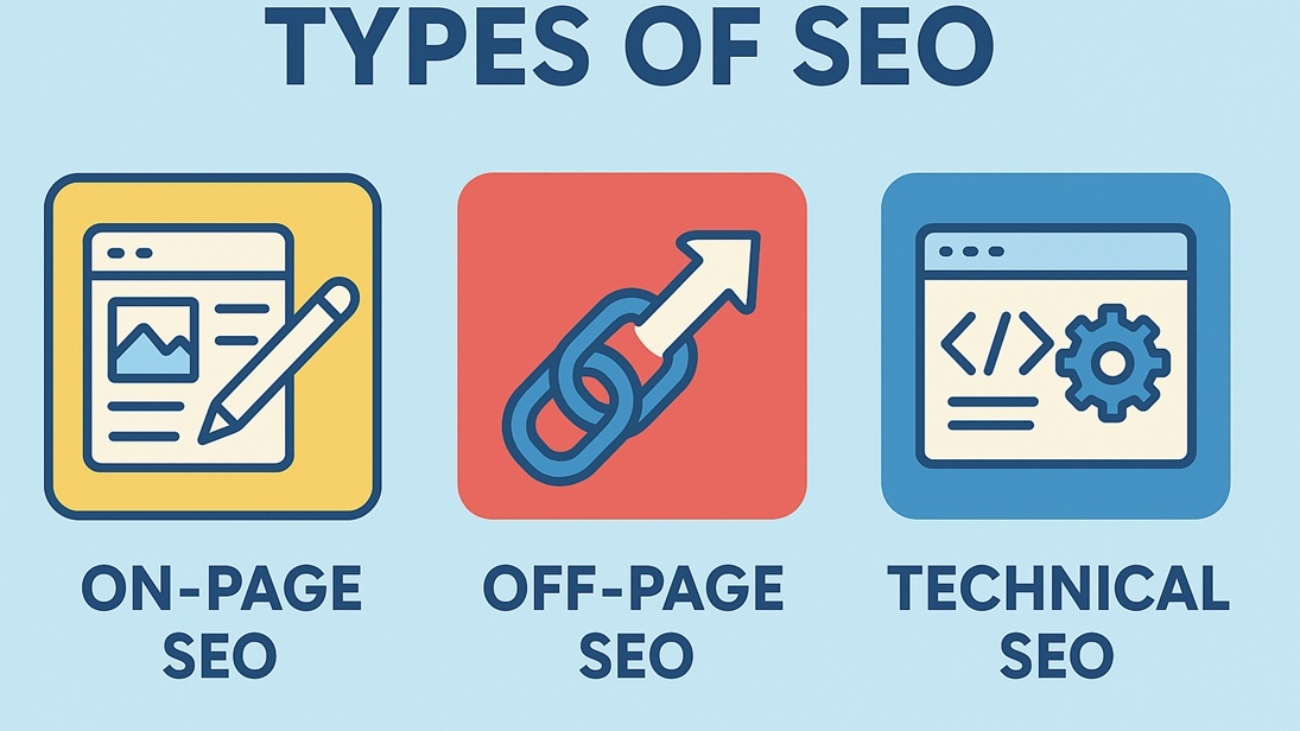
SEO isn’t one single tactic; it’s a layered approach. Each type plays a different role in how your site performs and how search engines respond to it. Some efforts happen directly on your website, others rely on external signals, and some are buried deep in the technical foundation. For a site to rank well and stay competitive, all three need to work together. Ignoring one usually weakens the rest.

On-Page SEO

On-page SEO is what you control directly on your site: titles, headers, body content, images, internal links, and metadata. If you’ve also searched for the question “what is SEO optimization?”, this is usually what people mean. It’s about making each page more accessible and relevant to both users and search engines.

Off-Page SEO

Off-page SEO is about building credibility. Think backlinks, social shares, and mentions. These elements signal to search engines that others trust your site. A strong SEO proposal often includes a backlink strategy for this reason.

Technical SEO

Technical SEO handles what happens behind the scenes: site speed, mobile responsiveness, crawlability, clean URLs, and structured data. These aren’t visible to most users, but search engines depend on them. If this foundation is weak, even great content might never show up.

This is where a service like Digital Upshot’s SEO offering makes a difference. It doesn’t just clean up a few titles or tweak metadata. It focuses on the core structure of the site. Fixing what search engines need to read, load, and rank the content properly is what should be the main focus. That backend work often becomes the reason why a site starts performing better, without making anything flashy on the surface.

Keywords and Intent: The Heart of SEO Strategy

At the center of everything is the searcher’s intent. It’s not just what they type, it’s what they mean. A good strategy aligns content with that intent, using keywords as a bridge.

You’ve likely come across terms like SEO meaning or search engine optimization definition. People type these not just to learn terms but to find clear, usable information. That’s why keyword research matters. It’s about understanding what your audience is really asking and meeting them there.

This part of SEO optimization isn’t about guessing. It’s data-driven. Tools and experience help identify which keywords matter, how competitive they are, and what kind of content is needed to match them. Done right, it doesn’t just improve visibility, it also boosts trust.

How to Optimize Your Site Step-by-Step

There’s no shortcut when it comes to getting SEO right. It’s a mix of structure, content, and performance, all working together. Instead of trying everything at once, start with the basics and get each layer right before moving on.

Here’s how that looks in practice:

1. Audit and Structure

Start by looking at how your site is built. Can a visitor get to any important page in just a few clicks? Are sections grouped logically? A clean layout with intuitive navigation helps users move around without confusion, and it makes it easier for search engines to crawl your pages. Fix any broken links, remove dead-end pages, and make sure your top content isn’t buried. A solid structure sets the stage for everything else.

2. Keyword Planning

This is where intent matters. Think about what your audience types into search when they need help or want answers. Questions like “What is SEO optimization?” or terms such as website SEO often show up during early research. Choose keywords that are specific and clearly tied to the kind of traffic you want. Avoid guessing. Use tools or search suggestions to see what real users are looking for, then shape your topics around that demand.

3. Content and Meta Tags

Content should be built around real questions and clear answers. Use headings to break up long sections and keep the flow easy to follow. If something can be scanned quickly, it’s more likely to be read. Title tags and meta descriptions should match what the page delivers. A mismatch between the headline and the body often leads to a bounce. Everything you write should help someone decide that your page is the right one to click, and the right one to stay on.

4. Technical SEO Basics

Your site has to load fast, work on all screen sizes, and stay stable as it loads. These are baseline expectations now, not bonuses. Tools like Search Console or Lighthouse can flag slow pages, crawl issues, or other problems that search engines notice. Fixing these directly impacts how pages are evaluated and ranked. Technical SEO doesn’t need to be complex; it just needs to be consistent and maintained over time.

5. Off-Page and E-E-A-T

Getting other sites to mention or link to yours is a signal that you’re worth paying attention to. This can come from guest posts, interviews, press, or mentions in trusted directories. Alongside links, show who’s behind your content. List author names, credentials, or business info clearly. These small trust markers feed into the search engine optimization definition and help establish experience, authority, and reliability in your space.

6. Track, Test, Repeat

SEO isn’t set and forget. Once changes are live, start measuring what’s working. Traffic, rankings, and conversion behavior will tell you what to keep, improve, or replace. Use analytics tools or dashboards to stay close to the data. Even a small tweak, like updating an outdated title or fixing a slow page, can improve results. Review regularly, test often, and keep refining what you build.

Content SEO vs. Structural SEO

When people talk about optimizing content, they usually think of blog posts and keywords. That’s a piece of it, but not the whole picture. Content SEO is about delivering the right message in the right format. Structural SEO is about making sure that content is framed and delivered in a way search engines can fully understand.

Content SEO

Content SEO covers everything the user sees and reads. That includes headings, body copy, internal links, image tags, and semantic formatting. Its goal is to communicate clearly while also helping search engines understand what each page is about. A blog post answering what is SEO, for example, needs to give a direct answer, follow a clear structure, and use relevant language naturally.

Well-placed keywords matter, but they’re not enough on their own. The writing needs to stay focused, useful, and organized. Sites that perform well usually combine sharp content with thoughtful placement of terms, questions, and topic signals that align with real search behavior.

Structural SEO

Structural SEO handles the foundation beneath that content. It includes how URLs are structured, how pages connect, and how hierarchy flows through the site. Elements like schema markup, breadcrumb navigation, and internal linking all help search engines map the content more accurately.

Even if the user never notices these parts, they shape how easily a site can be crawled and indexed. Without a strong structure, search engines may struggle to understand the depth or importance of what’s published.

E-E-A-T and Google’s Quality Guidelines

Ranking well is no longer just about having the right keywords or backlinks. Google now pays close attention to signals of Experience, Expertise, Authoritativeness, and Trustworthiness, together known as E-E-A-T. These qualities help search engines decide which content is reliable and which content to avoid showing for serious queries. If your site deals with topics related to health, money, safety, or business, these signals matter even more.

Here’s how each part of E-E-A-T plays a role in how your content is evaluated.

Experience: Show You’ve Actually Done the Work

Experience is about proving that the person writing the content has real, first-hand knowledge. If you’re talking about website SEO, have you worked on SEO projects? Can you speak from actual results or day-to-day challenges? Google looks for signs that the content is based on direct involvement, not just rewritten theory. Pages that show this, through screenshots, real examples, or practical steps, feel more genuine to both readers and search engines.

Expertise: Back It Up With Knowledge

Expertise is about depth. It’s one thing to answer about what is SEO optimization, it’s another to explain how it works, what tools to use, and how to apply it to different site types. Expert content answers not just the surface-level question, but also the related ones. Strong internal linking helps here. So do credentials, years of experience, or writing that clearly reflects professional understanding. Google doesn’t need a formal title, but it does expect content that reflects real mastery of the subject.

Authoritativeness: Earn Recognition From Others

Authority builds over time. It shows up when others mention your work, link to your content, or refer to your site as a go-to resource. In SEO, this might mean being featured on respected blogs, cited in guides, or listed in curated tools or directories. Authority can also come from being part of a trusted brand or organization. If your site consistently publishes useful, accurate content and others rely on it, that authority becomes visible to Google, too.

Trustworthiness: Be Transparent and Reliable

Trust is the baseline. Without it, the rest doesn’t hold up. Google wants to see clear contact details, privacy policies, secure connections (HTTPS), and honest presentation of content. Citing reliable sources, disclosing authorship, and being transparent about intent all support trust. If someone lands on your page searching for SEO meaning, they should know who wrote it, why it’s credible, and why they can rely on it.

Core Web Vitals and Page Experience

There was a time when content alone could help you rank. But not anymore. Google now evaluates how users experience your website. That’s where Core Web Vitals come in, metrics that measure loading speed, visual stability, and interactivity.

If your site loads slowly, shifts around while loading, or delays user interaction, your SEO ranking can take a hit. These aren’t just technical preferences; they reflect how frustrated or satisfied a real person feels when visiting your site.

Optimizing Core Web Vitals means prioritizing speed, mobile responsiveness, and clean design. Services like Digital Upshot’s SEO solution integrate these technical essentials into broader strategies. It’s not about patchwork fixes, it’s about making sure the whole experience supports long-term performance.

SEO for Local Businesses

Not all SEO strategies aim for national traffic. If you run a business that serves one city or region, local SEO is where your efforts should begin. It’s tailored for visibility in maps, directories, and localized search queries.

For example, if someone searches “plumber near me” or “best pizza in Andheri,” search engines prioritize local relevance. Google Business Profiles, consistent NAP info (Name, Address, Phone), and localized landing pages all matter. This form of search engine optimization marketing directly supports foot traffic and phone calls.

What makes local SEO unique is that intent is often immediate. Someone searching locally is usually ready to act. That’s why building out a local strategy is often a key part of any SEO proposal for small businesses looking to stand out in their market.

Examples of SEO in Action

Theory only goes so far. What makes SEO useful is how it’s applied to real websites with real goals. A local service business doesn’t need the same approach as an e-commerce store, and a content site plays by different rules entirely.

These examples break down how SEO works differently depending on the type of site, and how a few focused changes can lead to real results:

Local Business SEO

For a service-based business with a physical location, visibility depends on how well it’s optimized for local intent. When someone nearby searches for urgent help, like a plumbing issue, they usually use specific terms. That’s why the site should focus on location-based queries rather than broad phrases. Something like “emergency plumber in Bandra” is far more likely to match what people are actually typing into a search.

To show up for these searches, the website needs to be built with local signals in place. This includes:

  • Dedicated landing pages for each service area or neighborhood
  • City names are naturally placed in the page title, H1, and URL
  • A Google Map embedded on the contact page
  • Consistent business name, address, and phone number across all pages and directories

These signals help search engines verify where you operate and who you serve. To strengthen this further, add LocalBusiness schema markup, which tells Google about your hours, service types, and physical location in a structured way.

Customer reviews also play a big role in local SEO. Prompt happy clients to leave reviews on platforms like Google or Yelp, and then display a few of those directly on your site. They don’t just build trust with new visitors. They also support visibility in search. When content, structure, reviews, and technical detail all work together, the site becomes more relevant to local intent and more likely to show up at the exact moment someone is ready to call.

Ecommerce SEO

For online stores, SEO directly shapes how products are discovered and purchased. Every product page needs to clearly describe what’s being sold, using language that mirrors how people search.

If someone is looking for “organic face cream for dry skin,” that phrase should appear naturally in the page title, H1, and product description. This helps the product match real search queries without feeling forced.

Beyond the text, search engines also rely on visual context. Product images should have clear filenames and alt text that describe what’s shown. That’s especially useful in categories where visuals matter, like skincare, clothing, or decor. Good image SEO makes it easier for those products to surface in Google Images, where many shopping journeys begin.

Category and filter pages often get overlooked, but they’re just as critical. If those pages don’t have enough descriptive content or if the structure is unclear, they might not rank at all. To make them work:

Add short, useful copy that explains what the category covers
Keep the URL structure clean and consistent
Avoid thin or duplicate content by using unique text and canonical tags

Internal linking is another way ecommerce sites build structure. Blog posts, gift guides, or how-to articles should point directly to product pages. This gives users a better path to purchase and also signals relevance to search engines. The more connected the content, the more value it passes across the site.

All of this affects how people interact with the store. Products that are easier to find, pages that load quickly, and navigation that works across devices all contribute to better performance. That’s how ecommerce SEO supports conversions, not just by bringing people in, but by helping them complete the journey once they’re there.

Educational Blog SEO

Informational blogs do well when they match what people are actively searching for. Long-form content that answers questions clearly tends to perform best, especially for topics that need explanation.

When someone looks up “what is SEO optimization?” or SEO meaning, they’re looking for a straightforward answer. The blog post that delivers it in plain language, with a clean heading structure, is the one that usually earns top positions.

These types of queries often trigger featured snippets or “People Also Ask” sections, which puts extra weight on structure and clarity. Formatting matters. If a user can scan the page and find what they need without digging, that page has a better chance of ranking. To support that, content should focus on:

Definition Placement: Add the core answer or meaning near the top, ideally in the opening paragraph.
Clean Headings: Use direct, descriptive H2s and H3s that map to specific search queries.
Answer First: Keep explanations brief and to the point before expanding further down the page.
Targeted FAQs: Include short FAQ sections that address related queries without repeating the main content.

To build topical relevance, internal links play a key role. For example, a post that explains the search engine optimization definition can naturally connect to related articles, like guides on keyword planning, on-page structure, or technical cleanups. Linking between these pages helps search engines map out the site and understand its depth. It also gives the reader a reason to stick around.

This kind of structure does more than improve rankings. It increases time on site, reduces bounce, and supports a consistent experience across the blog. Over time, it becomes easier for search engines to trust the content, which leads to better placement without needing to chase every new trend or algorithm update.

AI, Chatbots, and the Future of SEO

Search has always adapted to how people use the internet. But the shift brought by AI and conversational tools is bigger than just a new feature. It’s changing what people expect from search and how search engines deliver it. Instead of clicking through multiple results, users now get answers directly, summarized, contextual, and fast. That change has real implications for how content is created, optimized, and surfaced. It doesn’t replace SEO. It changes its shape.

Here’s how AI is shifting the landscape and what it means for SEO moving forward.

How Search Is Changing

Search habits have evolved. People no longer rely only on typing short phrases into a search bar. Now they ask questions using voice assistants, interact with chatbots, or receive quick answers from AI-driven features. This shift hasn’t made SEO less relevant; it has made it more demanding. Being visible today means understanding how users interact with content across different formats and platforms.

The Rise of Generative Search

Tools like Google’s Search Generative Experience (SGE) and Bing’s AI results are reshaping what a search page looks like. Instead of showing a list of links, these tools pull key insights from top pages and summarize them instantly. If your content isn’t chosen for that summary, even a high ranking may not get you seen. This makes content quality, formatting, and clarity more important than ever.

Why Structure Matters More Than Ever

To stay visible in this new format, your pages need to be machine-friendly. That means clear headings, clean formatting, and structured data that helps AI understand what your content offers. It’s not just about using the right keywords. It’s about showing relevance through layout, topic clarity, and internal logic. If AI tools can’t follow the flow of your content, they won’t use it in generated answers.

Optimizing for Human and Machine

Queries like “What is SEO optimization?” or “How does website SEO work?” now require direct, focused answers. The content has to work for both human readers and AI systems scanning for useful blocks of information. That includes short summaries, question-based headings, and supporting sections that build on each other. The better your structure, the more likely your content becomes part of a result, even when no link is clicked.

SEO Isn’t Dying, It’s Expanding

AI tools aren’t replacing SEO. They’re changing what it includes. Today, SEO goes beyond keywords and backlinks. It covers how content is framed, how it reads, how fast it loads, and how users interact with it. The signals sent by time on page, bounce rate, and user engagement all feed into how search systems rank and surface content. Good SEO now means designing content that works across both human attention and machine interpretation.

Voice, Image, and Multimodal SEO

Search isn’t just typed anymore. People are using voice assistants, scanning images, and combining multiple search methods across platforms. That’s what makes multimodal SEO the next big thing.

Voice search requires content that answers questions clearly and directly. For example, someone might ask, “What’s the SEO meaning for a small business?” Your content has to be phrased in a way that devices can extract and read aloud.

Image search, meanwhile, is growing in shopping and design-related niches. Search engines analyze image names, alt text, and surrounding content to understand what an image shows. Optimizing for these new formats is quickly becoming part of standard SEO optimization practices for brands who want to stay visible.

Common SEO Mistakes to Avoid

Even the most experienced teams miss things when it comes to SEO. That’s partly because the landscape changes quickly, but also because many mistakes come from overthinking simple things. Whether you’re managing content, planning a new campaign, or reviewing a website SEO strategy, these are the issues that show up again and again. The good news is that fixing them often makes a bigger difference than people expect.

Keyword Stuffing Still Happens

The temptation to use the same keyword multiple times is real. But repeating a term in every heading or stuffing it into every paragraph doesn’t improve rankings. It hurts them. Search engines can tell when the writing feels forced or unnatural. It also makes the content harder to read. Instead, it’s better to focus on clarity, use related terms, and write for the reader first. A page that feels useful will always perform better than one that’s trying too hard to rank.

Weak or Confusing Structure

Your content can be well-written, but if the structure is a mess, it won’t rank well. Pages without internal links, unclear heading levels, or broken navigation create a bad experience for users and crawlers. This is one of the most common issues found during a technical audit. When search engines can’t understand how pages connect, or worse, can’t reach them at all, your visibility takes a hit. Every good SEO proposal should include a plan to clean up and strengthen the site structure.

Letting Content Go Stale

Search engines favor pages that are fresh, reliable, and updated. Leaving old content untouched for years is a missed opportunity. Something as simple as refreshing stats, adding a few new sections, or improving formatting can help a page regain traction. Sites that regularly update their content often see better SEO ranking across the board.

Ignoring Mobile Optimization

With most traffic coming from mobile devices, a site that looks or performs poorly on a phone is at a major disadvantage. Pages that don’t adapt well to different screen sizes, load slowly, or cause layout shifts will struggle to meet performance standards like Core Web Vitals. These issues aren’t always obvious from a desktop. That’s why every serious SEO review should include mobile testing.

Final Thoughts

SEO isn’t magic, it’s a method. It’s the result of aligning content, structure, and performance with how people search and how algorithms sort. While strategies evolve, the fundamentals stay consistent: relevance, clarity, and quality win every time.

If you’re working on your website SEO, remember that small changes often compound. Page speed, internal links, updated content, and better structure all add up. The question isn’t just “why is search engine optimization important?”, but how consistently it’s done.

You don’t have to go it alone. Platforms like Digital Upshot have taken a grounded, methodical approach to SEO, quietly helping businesses refine their presence without shortcuts. Their approach shows that proper SEO isn’t about chasing trends; it’s about building strong foundations that hold up long-term.

FAQs on What is SEO

What are the 4 pillars of SEO?
The four pillars of SEO are technical SEO, on-page SEO, content, and off-page SEO. Each one supports how your site performs in search results. Technical SEO focuses on things like site speed and mobile usability. On-page SEO covers how well your pages are structured. Content speaks to what’s written on the site. Off-page SEO includes backlinks and overall credibility.

What are examples of SEO techniques?
Common SEO techniques include optimizing title tags, adding internal links, improving page speed, using structured data, and writing content around relevant keywords. Updating old content, improving mobile design, and earning backlinks from trusted sites also make a big impact.

What is an example of SEO in real life?
Say you run a bakery in Delhi. If someone types “best chocolate cake near me” and your website shows up at the top, that’s SEO in action. It means your site had the right keywords, structure, and local signals to match what people were looking for.

What are the four types of SEO?
The four types are on-page SEO, off-page SEO, technical SEO, and local SEO. On-page focuses on the content itself. Off-page is about building authority through backlinks. Technical SEO makes sure your site runs smoothly. Local SEO helps you appear in results tied to a specific area.

Which tool is best for SEO?
There isn’t just one tool that covers everything. Google Search Console is a must for tracking performance. Tools like Ahrefs, SEMrush, or Ubersuggest help with keyword research, backlinks, and competitor analysis. Each tool has its strengths depending on what you’re working on.

What are the 4 C’s of SEO?
The 4 C’s stand for Content, Code, Credibility, and Context. Content refers to what you’re saying. Code covers the technical setup of your site. Credibility means your trust signals and backlinks. Context is how well your content fits user intent and search relevance.

Which type of SEO is best?
The best type of SEO is the one that fits your goal. For most websites, combining technical, on-page, and content SEO is key. If you run a local business, local SEO matters more. For online brands, content and link-building take the lead.

Which language is best for SEO?
There’s no single best language for SEO. English dominates global search, but it depends on your target audience. The important part is how clearly and naturally your content is written. Clean HTML code, fast load times, and structured content work well in any language.
off page optimization

Everything You Need to Know About Off-Page Optimisation in Simple Words

Getting your website to rank on search engines isn’t just about what’s on the page. How the rest of the internet interacts with your site plays a huge role, too. It involves more than content and keywords; it’s about earning recognition from beyond your own platform.

That’s when off-page optimisation becomes important. It focuses on building trust, relevance, and authority through external signals like backlinks, mentions, shares, and reviews. When credible sources point to your site, it shows search engines that your content is valuable and reliable. This can help improve your rankings and boost your visibility.

Focusing on efforts beyond your website connects your content to a wider digital network. The more trusted sources refer to your pages, the more established your online reputation becomes. Strong on-page content is important, but real success also depends on how others interact with your site across the web.

What Does Off-Page Optimisation Really Mean?

Off-page optimisation includes all the actions you take outside of your own website to increase your position in search engine results. Unlike on-page SEO, which focuses on internal elements like metadata, keyword usage, and content structure, off-page strategies depend heavily on how other online entities interact with your content. In simple terms, it’s about how the rest of the internet perceives your website.

When your site is mentioned on another blog, linked from a reputable directory, or shared across social media, it builds authority and trust in the eyes of both users and search engines. These external validations play a huge role in shaping your domain’s digital reputation. Search engines interpret such engagements as proof that your content is valuable, relevant, and reliable.

The strength of your off-page profile depends on a mix of quality and consistency. Even small activities, such as being listed in local business directories or regularly contributing to industry forums, accumulate over time and can help you build a stronger foundation for search rankings.

Why Backlinks Matter in Off-Page SEO

Backlinks are links from one website to another, and they serve as the most influential signal in off-page optimisation. When your content is cited by another website, it acts as a vote of confidence. The more reputable the linking site, the more valuable that vote becomes. Backlinks not only drive referral traffic but also tell search engines that your site is worth ranking.

Backlinks come in various types, such as dofollow and nofollow. Dofollow links pass on SEO value, while nofollow links mainly drive traffic but don’t influence rankings as much. However, even nofollow links can benefit your overall visibility if placed on high-traffic, relevant platforms. Quality matters far more than quantity; a few strong backlinks from trusted sites often outperform dozens of weak ones.

To build a strong backlink profile, your content must be link-worthy. That means it should offer unique insights, useful tools, or highly specific information that others would find valuable to share. Natural backlink growth comes when your content is genuinely helpful, not just created for the sake of SEO.

Guest Posting as a Strategic Link Building Method

Guest posting involves writing articles for other websites in your industry and including a link back to your own site. It serves multiple purposes: building authority, tapping into new audiences, and securing high-quality backlinks. A well-placed guest article can significantly improve your site’s trust signals and referral traffic.

This strategy works best when you publish on platforms with high domain authority and active audiences. The goal is not just to earn a backlink but to deliver content that adds value to the readers of that site. Over time, repeated guest contributions can position your brand as a recognised name in your niche, leading to more organic linking opportunities.

Besides helping with off-page optimisation, guest posts can lead to collaborations, networking opportunities, and even media coverage. A well-researched and timely guest post can be the foundation for long-term digital partnerships and increased visibility across relevant spaces.

Using Social Media for Indirect SEO Gains

While social shares are not direct ranking signals, social media still plays a vital role in off-page optimisation. Platforms like Instagram, Twitter, LinkedIn, and Facebook allow you to distribute content, interact with followers, and amplify your reach beyond traditional search traffic. The broader your content’s exposure, the more likely it is to attract organic backlinks.

Sharing high-value content consistently helps create a loyal audience. These followers may eventually reference or link to your content on their own sites or platforms. Additionally, search engines do index social profiles and posts, which indirectly contribute to visibility and content distribution.

Strong engagement, likes, shares, and comments indicate that your content resonates with people. This validation encourages further exposure and opens up additional link-building opportunities. Social media also offers real-time communication, allowing you to engage directly with your audience and gather feedback that improves future content.

Harnessing Forums and Online Communities

Participating in forums related to your niche gives you a chance to share knowledge, answer questions, and drop relevant links where appropriate. This method not only drives traffic but also strengthens off-page optimisation by increasing your brand’s presence across multiple platforms.

When engaging on forums, avoid spammy tactics. Instead, focus on genuine discussions. If someone asks a question that your content answers, it’s perfectly acceptable to provide a helpful explanation and link back to the resource. Over time, such contributions build credibility and visibility.

Communities like Reddit, Stack Exchange, and niche-specific groups on Facebook and LinkedIn offer direct access to people interested in your domain. Engaging actively and respectfully positions your site as a trusted resource, which often leads to mentions and natural link-building.

Influencer Collaboration and Content Amplification

Partnering with influencers can give your content a considerable boost. Influencers come with loyal audiences who value their suggestions. If they mention your brand or link to your website, it sends a strong signal of trust. This also enhances traffic, engagement, and search visibility.

Not all influencer partnerships need to be paid. Many micro-influencers are open to collaborations in exchange for quality content, shared value, or product features. What matters most is alignment; ensure the influencer’s content and audience are relevant to your niche.

Directory Listings and Business Citations

Submitting your website to trustworthy directories improves your brand’s online presence and search credibility. Business directories such as Justdial or IndiaMART allow you to list accurate information like name, address, and website URL. These citations help Google verify your legitimacy and rank you better in local searches.

Consistency is key. All listings should reflect identical information across platforms to avoid confusion. These listings not only increase your digital footprint but also drive qualified leads to your site.

While directory submissions used to be abused for backlinks, today’s focus is more on quality. Choose directories with real user engagement and relevance to your industry. These listings also contribute to off-page optimisation by building external credibility.

Review Platforms and Reputation Signals

Customer reviews are another vital part of your off-page SEO. Reviews on platforms like Google My Business, Trustpilot, and product directories influence user perception and indirectly affect rankings. Positive reviews show that real users find your services valuable.

Encouraging satisfied customers to leave reviews helps maintain a strong online reputation. Make it a habit to respond to reviews, both positive and negative, to show that you value feedback. This not only builds trust but also improves engagement.

Search engines notice active profiles and consistent reviews. They take them as signals of business legitimacy and user satisfaction, both of which play a part in how your site ranks over time.

Engaging in Q&A Platforms for Brand Awareness

Q&A websites like Quora and Stack Overflow allow you to demonstrate expertise by answering real questions. You can share helpful insights and, where suitable, include links to relevant content from your website. These platforms have long lifespans for answers, meaning your posts can generate traffic for months.

The key is to focus on value. Don’t drop links for the sake of it. Instead, provide detailed answers that genuinely help readers. If your content matches their query, adding a link feels natural and useful.

A well-maintained profile on such platforms not only enhances credibility but also supports off-page optimisation through relevant backlinks and increased content visibility.

Video Content as an Off-Page Asset

Videos hosted on platforms like YouTube or Vimeo can be powerful off-page tools. If your videos solve problems, offer tutorials, or present product demos, viewers are more likely to engage and share them. This boosts visibility and opens backlinking opportunities.

Include links to relevant pages in the video description to direct viewers back to your site. Also, make use of visual branding in your videos to increase recall. The content should be informative, not just promotional.

Broken Link Building as a Backlink Opportunity

Broken link building offers a smart and practical way to earn quality backlinks. The idea is to find web pages with links that no longer work and suggest your own content to replace them. This helps the site owner improve user experience while giving your page a new backlink.

To start, use trusted SEO tools to scan blogs, resource pages, or directories in your niche for broken links. Focus on websites that align closely with your content topics. Once you identify a broken link, reach out to the site owner with a brief and polite message. Offer your page as a replacement only if it clearly matches the context of the missing content.

Your content should be relevant, useful, and worthy of being shared. If it truly serves the same purpose as the broken resource, there’s a good chance the owner will add your link. This approach builds credibility while helping others keep their sites updated and valuable.

Content Syndication for Wider Reach

Republishing your content on third-party platforms helps increase visibility without duplicating effort. Websites like Medium, LinkedIn, and News aggregators allow you to post the same article or a summary with a link to the original source.

To protect your original post’s SEO value, always use a canonical tag or mention the source link clearly. This helps search engines credit your site with the original content and still benefit from the extra exposure.

Syndication adds new paths for users to discover your content, making it a useful part of your off-page plan, especially for evergreen articles that continue to deliver value over time.

What Consistent Off-Page SEO Delivers Over Time

Off-page optimisation is a long-term process, but the results are lasting. Unlike short-term strategies that focus on immediate traffic spikes, off-page efforts build credibility and trust that hold value even during algorithm updates. As your backlink profile grows, so does your authority in search results.

The key to successful off-page SEO is staying consistent with outreach, engagement, and high-quality content. Don’t rely on shortcuts or automated tools. Instead, build real relationships, contribute meaningfully to communities, and create resources worth sharing.

Every external signal, from a shared link to a five-star review, adds to your digital reputation. With time, these efforts compound and lead to stronger rankings, wider visibility, and more sustainable traffic for your site.

FAQs on Off-Page SEO

Which is an example of off-page SEO?

An example of off-page SEO is earning a backlink from a high-authority blog that links to your article. This link acts as a vote of confidence for your content, helping search engines understand its credibility and relevance. Other examples include social media shares, brand mentions, online reviews, and guest posts on external websites.

Is off-page SEO still effective for SEO?

Yes, off-page SEO is still highly effective. It remains a key factor in how search engines evaluate website trust and authority. Quality backlinks, user engagement, and third-party references all contribute to better search visibility. While on-page SEO focuses on structure and content, off-page signals help search engines understand how others value your site.

How to measure off-page SEO?

You can measure off-page SEO using these key metrics:

  • Backlink profile: Track the number, quality, and relevance of backlinks through tools like Ahrefs, Moz, or Google Search Console.
  • Domain authority (DA) and Page authority (PA): These scores reflect the strength of your site’s backlink profile.
  • Referral traffic: Check how much traffic comes from external sources using Google Analytics.
  • Brand mentions and shares: Monitor social signals and unlinked brand mentions with tools like Brand24 or BuzzSumo.
what is technical SEO

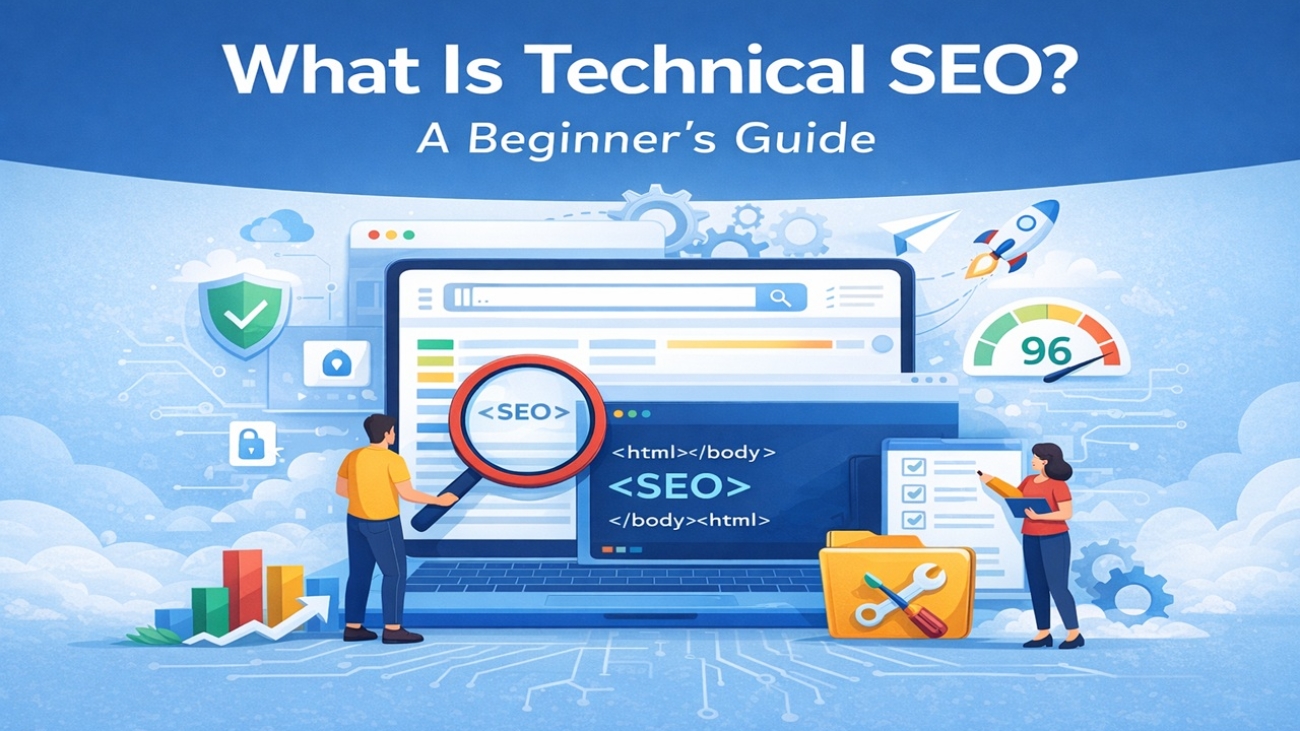
What Is Technical SEO? A Beginner’s Guide

SEO is a term that you have likely heard of, especially if you are attempting to build your traffic. You understand that it is about how you optimize your site in order to be found in Google. The thing is, however, that not every SEO is the same. One is the content side, the link-building side, and then there is the part that holds it going in a smooth environment, and that is the technical SEO.

What is technical SEO, then? In short, it is ensuring that your site is functioning as Google would want it to. It is possible to write the best content in the world and still not rank because your site is slow, messy, or difficult to crawl. This is why the foundation of online visibility is technical SEO.

The following are the fundamentals every beginner should familiarize him or herself with and how you can implement them without overwhelming yourself on your site.

What Is Technical SEO?

We can begin with the big question: What is technical SEO? It is the procedure of maximizing the backend format of your website to enable search engines to crawl and index it correctly. Consider it to be the foundation of a house. Without a good foundation, the house will fall, no matter how attractive it may be on the outside.

Technical SEO does not involve writing blogs or getting backlinks. It is all about ensuring your site is fast, mobile-friendly, secure, and accessible to people and search engines alike. Suppose that Google bots are the visitors who came to your house. When the doors are congested, the lights are low, and the rooms are disoriented, they will exit within a short span of time. Technical SEO removes the obstacles and prepares them to have fun on the tour.

Why Is Technical SEO Important?

If your website doesn’t load in a few seconds, you’ve lost half your visitors. That’s not a guess, it’s what data tells us. People are impatient, and so is Google. A site that runs smoothly signals quality, trust, and user satisfaction.

But technical SEO goes beyond speed. It ensures your site is crawlable, indexable, and user-friendly. Without it, search engines won’t understand your content, even if it’s amazing. And if they can’t understand it, they won’t rank it.

Here’s the truth: technical SEO sets the stage for every other SEO effort you make. It doesn’t matter how great your keyword research is or how powerful your backlinks are if Google can’t access your site efficiently, your efforts won’t pay off.

Core Elements of Technical SEO

Now that you know why it matters, let’s break down the core pieces of technical SEO. These are the areas you need to focus on if you want your site to perform well in search results.

Website Speed and Performance

People don’t wait for slow websites. Google doesn’t either. Site speed is a direct ranking factor, but it also impacts conversions. Faster websites keep visitors happy and engaged.

Want to know where you stand? Use tools like Google PageSpeed Insights or GTmetrix. They’ll show you exactly what’s slowing your site down, like large images, too many scripts, or poor hosting. Fixing these issues can instantly improve performance.

Think of speed as the first impression. If your site loads fast, you build trust right away. If it doesn’t, you’re out of the game before it even starts.

Mobile-Friendliness

Over 60% of searches happen on mobile devices. That’s why Google uses mobile-first indexing. In other words, it judges your site based on its mobile version first.

What does that mean for you? Your site needs to be responsive, easy to navigate, and readable on a small screen. Use Google’s Mobile-Friendly Test to check if your site passes. If it doesn’t, it’s time to update your design.

A mobile-friendly site isn’t just good for SEO, it’s good for business. It keeps users scrolling, clicking, and buying.

Crawlability and Indexing

Google uses bots to crawl your site. If they can’t crawl it, they can’t index it. And if they can’t index it, you won’t rank.

This is where files like robots.txt and XML sitemaps come in. Robots.txt tells bots where they can and can’t go. XML sitemaps give them a roadmap of your site. Together, they make crawling smooth and efficient.

Want to check if your site is being indexed? Use Google Search Console. It will show you what pages are indexed and flag crawling errors you need to fix.

Site Architecture and URL Structure

Imagine walking into a store where everything is scattered randomly. Frustrating, right? That’s how users (and Google) feel when your site lacks structure.

Good site architecture means creating a clear hierarchy—homepage → category → subcategory → product or post. This helps users find what they need quickly and helps Google understand your content.

Keep URLs short, descriptive, and clean. A good rule of thumb: if a human can’t read it easily, it’s not SEO-friendly.

HTTPS and Website Security

Google has confirmed HTTPS is a ranking factor. If your site isn’t secure, visitors will see a “Not Secure” warning in their browser. That alone can scare people away.

Getting an SSL certificate is simple, and many hosting providers include it for free. Once installed, your site will show “https://” instead of “http://.” It’s a small change that makes a big difference in trust and rankings.

Security isn’t optional anymore; it’s expected.

Structured Data and Schema Markup

Structured data is code that helps Google understand your content better. Think of it as giving search engines extra context.

For example, if you run a recipe site, schema markup can tell Google the cooking time, ingredients, and ratings. That’s how you get those fancy rich snippets in search results.

Adding schema doesn’t directly improve rankings, but it can boost your visibility and click-through rates. More clicks mean more traffic.

Core Web Vitals and User Experience

Google’s Core Web Vitals focus on three things: loading speed, interactivity, and visual stability. Together, they measure how smooth your site feels to users.

  • Largest Contentful Paint (LCP): How fast your main content loads.
  • First Input Delay (FID): How quickly your site responds when someone clicks.
  • Cumulative Layout Shift (CLS): How stable your page looks while loading.

Improving these metrics makes your site faster, cleaner, and more enjoyable. It’s good for users and great for SEO.

Duplicate Content and Canonicalization

Duplicate content can confuse search engines. If you have two pages with the same information, Google won’t know which one to rank.

Canonical tags solve this problem. They tell Google which version of a page is the “main” one. Redirects are another solution when you consolidate pages.

Fixing duplicate content makes your site stronger and avoids splitting ranking signals between pages.

XML Sitemaps

An XML sitemap is like a GPS for Google. It lists all the important pages on your site and helps search engines find them faster.

Most CMS platforms like WordPress generate sitemaps automatically. Just make sure yours is up to date and submitted to Google Search Console.

Think of your sitemap as your site’s elevator pitch. It tells search engines, “Here’s what I’ve got, take a look.”

Error Pages and Redirects

Nobody likes hitting a dead end. That’s what happens when users land on broken pages. A 404 error is a signal that something’s wrong.

Custom 404 pages can soften the blow by guiding users back to useful content. Redirects are another way to fix broken links. Use 301 redirects for permanent changes and 302 for temporary ones.

Managing errors keeps your site clean and your users happy.

Common Technical SEO Mistakes Beginners Make

If you’re new to SEO, it’s easy to slip up. I’ve seen it happen hundreds of times. The good news? Most mistakes are simple to fix once you know what to look for. Let’s walk through the most common ones.

1. Ignoring Site Speed

Speed isn’t just a ranking factor; it’s a user experience factor. If your site takes more than a few seconds to load, visitors bounce. And when visitors bounce, Google takes notice. The problem is that many beginners don’t even realize their site is slow. They load it on their own high-speed Wi-Fi and assume everyone else sees it the same way.

The fix: run your site through Google PageSpeed Insights. Pay attention to things like image size, server response, and caching. Compress large files, move to a better host if needed, and keep testing. A one-second improvement in load time can mean a massive jump in conversions.

2. Blocking Crawlers with Robots.txt by Accident

Robots.txt is a tiny file with huge power. It tells Google where it can and can’t go on your site. One wrong line of code and you can block entire sections, sometimes even your whole website. We can’t tell you how many businesses have come to me, wondering why they’re not showing up in search, only to discover their robots.txt was shutting the door on Google.

The fix: open your robots.txt file (yoursite.com/robots.txt) and double-check the rules. Make sure you’re not disallowing important folders or pages. When in doubt, keep it simple.

3. Forgetting to Submit an XML Sitemap

Think of your XML sitemap as your site’s map for Google. Without it, search engines might miss important pages, especially if your site is new, big, or doesn’t have many backlinks yet. Beginners often overlook this step, assuming Google will just figure it out.

The fix: generate a sitemap (if you’re on WordPress, plugins like Yoast or Rank Math make it easy). Then submit it to Google Search Console. This one simple step helps Google crawl your site more efficiently.

4. Using Too Many Redirects

Redirects are helpful when you move or delete a page. But stack too many on top of each other and things get messy. A chain of redirects slows down your site and confuses crawlers. Beginners sometimes rely on redirects as a quick fix for everything, like cleaning up broken links or restructuring a site, without realizing the long-term consequences.

The fix: use redirects sparingly and strategically. A clean 301 redirect is fine, but avoid redirect chains. If you restructure your site, take the time to update your internal links instead of piling on redirects.

5. Poor Internal Linking

Internal links are how search engines (and users) navigate your site. Without them, your content sits in isolation, hard to find and harder to rank. Beginners often focus only on external backlinks and forget the power of linking their own pages together.

The fix: build a logical internal linking strategy. Every new blog post should link to related pages, and older content should link forward to newer pieces. Use descriptive anchor text so Google knows what each page is about. Done right, internal linking spreads authority across your site and makes it easier for users to keep exploring.

Why These Mistakes Matter

Individually, these issues might seem small. But together, they can cripple your site’s performance. The best part? They’re avoidable. Fixing them early saves you months of frustration and clears the way for your content and links to shine.

How to Perform a Basic Technical SEO Audit

Want to know if your site is technically sound? Run a technical SEO audit. Don’t worry, it’s not as scary as it sounds. Think of it like giving your site a routine check-up. You don’t need to be a developer or buy expensive software to get started.

Here’s a simple step-by-step process anyone can follow:

1. Check Your Robots.txt File

Robots.txt tells search engines where they can and can’t go on your site. The problem? Many beginners accidentally block important sections, sometimes even the entire website. That’s like locking your store doors and wondering why no customers are coming in.

Action step: Go to yourdomain.com/robots.txt and look at the file. Make sure you’re not disallowing critical pages. Keep it simple unless you know exactly what you’re doing.

2. Submit or Update Your XML Sitemap in Google Search Console

An XML sitemap is your roadmap for Google. It shows crawlers which pages matter most. Without it, search engines might miss important content, especially if your site is new or complex.

Action step: Generate a sitemap using your CMS (WordPress plugins like Yoast or Rank Math can do this automatically). Then log in to Google Search Console and submit it under the “Sitemaps” tab. This helps Google crawl and index your pages faster.

3. Test Your Site Speed

Site speed is one of the easiest things to test and one of the most important. A slow site hurts both rankings and conversions.

Action step: Plug your site into Google PageSpeed Insights or GTmetrix. Look for red flags like oversized images, unused scripts, or server delays. Fix the basics: compress images, enable caching, and check if your hosting plan is holding you back.

4. Run the Mobile-Friendly Test

Since Google uses mobile-first indexing, your site’s mobile version is the one that really counts. If your design doesn’t work on phones, you’ll lose both rankings and visitors.

Action step: Use Google’s Mobile-Friendly Test tool. If you see errors, update your design or switch to a responsive theme. Navigation, text size, and button spacing all matter for usability.

5. Look for Crawl Errors in Search Console

Google Search Console is your best friend here. It shows you which pages are indexed, which ones aren’t, and why. Crawl errors often point to broken links, blocked pages, or duplicate content.

Action step: Open the “Coverage” report in Search Console. If you see errors, click into them and follow the recommendations. Fixing crawl issues helps search engines access your content correctly.

Going Deeper

The steps above will give you a strong foundation, but if you want more detail, try tools like Screaming Frog (free version), Ahrefs, or SEMrush. They’ll crawl your site the same way Google does and generate a detailed report of technical SEO issues.

For beginners, though, the five steps above are more than enough to uncover the biggest problems. The key is to make auditing a habit, not a one-time task.

Best Practices for Long-Term Technical SEO Success

Here’s the truth: technical SEO isn’t a “set it and forget it” deal. It’s more like maintaining a car. You don’t change the oil once and expect it to run forever; you keep checking in. The same goes for your website. The internet shifts, Google updates, and your site grows. If you’re not keeping up, problems creep in.

Here are the habits that will keep your site healthy in the long run:

1. Run a Mini Technical SEO Checklist Every Quarter

Think of this as your routine health checkup. Every few months, go through a quick review: test site speed, check indexing in Google Search Console, scan for broken links, and make sure your sitemap is still accurate. This doesn’t take long, but it helps you catch small issues before they snowball.

A quarterly check keeps your site in shape and prevents surprises when traffic suddenly dips.

2. Keep Your CMS, Plugins, and Themes Updated

Outdated software is one of the fastest ways to run into technical SEO issues. Old plugins slow your site, cause conflicts, and sometimes even open the door to security problems. And if your site gets hacked, you can kiss your rankings goodbye.

The fix is simple: update regularly. Most modern CMS platforms make it as easy as clicking a button. Set a reminder once a month to review updates. Not only will your site run smoothly, but you’ll also benefit from the latest performance improvements.

3. Regularly Test Site Speed and Core Web Vitals

Your site might load fast today, but what about six months from now, after you’ve added more content, images, or plugins? Speed isn’t a one-time project; it needs monitoring. Google’s Core Web Vitals make this even more important since they measure real-world user experience.

Run tests with tools like PageSpeed Insights or Lighthouse. If your scores drop, act quickly: compress images, reduce unused scripts, and keep your hosting plan aligned with your traffic needs. A small tweak can make a huge difference in user satisfaction and rankings.

4. Watch Analytics for Sudden Drops in Traffic

Traffic drops are like the check-engine light on your car. They tell you something’s wrong. Maybe your pages aren’t being indexed, maybe there’s a crawl error, or maybe your site speed tanked. Beginners often panic when traffic falls, but seasoned marketers know it’s just a signal to investigate.

Use Google Analytics and Search Console together. If traffic dips, look for patterns like did it happen site-wide or on specific pages? Were there crawl errors reported? Did you recently change your site structure? Finding the root cause quickly helps you fix the issue before it damages your momentum.

Keeping the Engine Running

Technical SEO success comes down to discipline. If you build these habits into your routine, you’ll avoid most major problems. It’s not about being flawless, it’s about being proactive. Just like a well-serviced car, a well-maintained website runs longer, smoother, and gets you where you want to go faster.

Conclusion

So, what is technical SEO? It’s the behind-the-scenes work that makes your website fast, secure, crawlable, and user-friendly. Without it, your content and backlinks won’t reach their full potential.

The good news is you don’t need to be a developer to get started. Begin with the basics like speed, mobile-friendliness, sitemaps, and security. As you get comfortable, you can dive deeper into schema, Core Web Vitals, and audits.

Remember: technical SEO is a long game. The more you invest in your site’s foundation, the easier it becomes to grow traffic, rank higher, and keep your audience happy.

FAQs on Technical SEO

1. What is technical SEO vs on-page SEO?

Technical SEO focuses on a website’s infrastructure, like crawling, indexing, site speed, and security, while on-page SEO improves visible elements such as content, keywords, and meta tags. Together, they ensure search engines can both access your site properly and understand its content for ranking.

2. What are the 4 types of SEO?

The four types of SEO are technical SEO, on-page SEO, off-page SEO, and local SEO. Each plays a unique role in helping search engines locate, crawl, index, and rank your website effectively.

3. What is the difference between local SEO and technical SEO?

Local SEO optimizes a business’s online presence to appear in region-specific searches, while technical SEO strengthens the website’s underlying structure for better crawling, indexing, and ranking. Both are essential for visibility, but they target different aspects of search optimization.

4. What is technical content in SEO?

Technical content in SEO refers to information that helps search engines and users understand site functionality, like structured data, schema, and optimization guides. It supports technical SEO by making pages more accessible, indexable, and informative.

what is local SEO

What Is Local SEO and Why It Matters in 2026

When was the last time you searched “coffee shop near me” or “plumber open now” on your phone?

Chances are, you weren’t just browsing. You were ready to visit or call a business nearby. That’s the power of local search, and it’s where Local SEO comes in.

In 2026, the answer to the question “What is local SEO?” isn’t just a buzzword. It’s the difference between being discovered by ready-to-buy customers or being invisible in your own neighborhood.

Let’s break down why it matters now more than ever, and how businesses can make the most of it.

What Is Local SEO?

So, what is local SEO exactly? At its core, Local SEO is the process of optimizing your business to appear in location-based searches on platforms like Google Search and Google Maps.

If someone nearby types in “dentist near me,” the results they see are shaped by how well those practices have invested in local search optimization.

Unlike broad SEO strategies that target global or national audiences, local business SEO focuses on driving foot traffic, calls, and leads from customers in your immediate area.

Google uses three main factors, like relevance, distance, and prominence, to decide which businesses appear first. That means your online presence needs to reflect accurate, consistent, and trustworthy information across the web.

Why Local SEO Matters in 2026

Think about your own habits. If you’re hungry, you pull out your phone and type “pizza near me.” You don’t want to scroll through national chains; you want the best slice a few blocks away.

That’s why what is local SEO is such a big deal: it connects intent with action.

Here are a few numbers to paint the picture:

  • 99% of people search online to find local businesses
  • Nearly 80% of local searches result in a purchase
  • “Near me” searches have grown more than 900% in recent years

Trust is also tied directly to visibility. Customers lean heavily on reviews and accurate business information. Over 80% of users trust Google reviews as much as personal recommendations.

If your listing isn’t optimized, you could miss out on traffic that’s ready to convert. And in 2026, with AI search results reshaping how people find businesses, local SEO marketing plays an even bigger role in helping companies appear in generative, conversational searches.

Core Elements of an Effective Local SEO Strategy

To dominate your local market in 2026, you need more than luck; you need a strategy built around the essentials of what is local SEO. Each piece of the puzzle works together to improve visibility, build trust, and attract high-intent customers ready to buy.

Let’s break down the core elements and how you can leverage them effectively:

Google Business Profile (GBP)

Your Google Business Profile is the foundation of local business SEO. When someone searches for a service in your area, the local pack, including the map and top three results, is often the first thing they see. If your profile isn’t optimized, you’re invisible in the most valuable real estate of search.

To maximize your GBP:

  • Add complete business information (hours, phone number, website, services, and attributes)
  • Upload high-quality photos of your location, products, or team
  • Post weekly updates or promotions to show activity
  • Respond promptly to all customer reviews, positive or negative

Think of your GBP as your digital storefront. If it looks empty or outdated, customers will skip past you. But if it’s detailed, engaging, and up-to-date, it becomes the first “yes” in their buying decision.

Local Keyword Optimization

Keywords are still the backbone of SEO, but local searches behave differently. People don’t just type “pizza”; they type “best pizza near me open now.” That’s why your strategy must adapt to conversational, intent-driven queries.

This is where knowing the answer to “What is local SEO optimization?” becomes critical. It means weaving location-based terms into headers, page titles, meta descriptions, and even image alt text. But it’s not about repetition; it’s about relevance.

Action steps:

  • Use tools like Google Keyword Planner or Semrush to uncover local variations of your services
  • Create location-specific landing pages (e.g., “Plumbing Services in Downtown Chicago”)
  • Include nearby landmarks, neighborhoods, or city names to align with how real users search

The goal is to speak the same language your customers use when they’re ready to buy. Done right, you’ll rank not just in organic results but in map packs too.

Reviews and Reputation

Word-of-mouth has moved online. Today, 87% of people read reviews before engaging with a business, and over 70% won’t even consider companies with fewer than three stars. That makes reputation a ranking factor as well as a trust signal.

Reviews impact:

  • Ranking: Google uses reviews as a local pack ranking factor
  • Conversions: Positive reviews build instant credibility
  • Engagement: Responding shows you value feedback, which boosts trust

Action steps:

  • Make review requests part of your customer experience after a purchase, service, or appointment
  • Use QR codes or direct links to simplify the process
  • Respond to every review, whether it’s praise or criticism, to show engagement

Remember, a mix of reviews, even some constructive ones, can look more authentic than a page of only five-star ratings.

Citations and Backlinks

Citations are mentions of your business details (NAP: name, address, phone) on directories, apps, or websites. Consistency is key here. If your business is listed as “Main Street Pizza” in one place and “Main St. Pizza Co.” in another, search engines may treat them as different businesses, hurting trust.

Action steps for citations:

  • Audit your listings across Google, Bing, Yelp, Apple Maps, and niche directories
  • Correct inconsistencies and keep them updated
  • Use citation management tools for scalability

Backlinks, meanwhile, are digital endorsements. When local organizations, newspapers, or bloggers link to you, it boosts your authority. Unlike national SEO, the focus here should be on relevance and proximity.

Ideas for local backlinks:

  • Partner with local charities or events for sponsorship mentions
  • Collaborate with local bloggers or influencers
  • Submit stories to local media outlets about business milestones

Think of backlinks as community connections in digital form. The stronger your ties, the stronger your authority.

Analytics and Tools

“If you can’t measure it, you can’t improve it.” That’s especially true in Local SEO. Tracking performance shows not only what’s working but also where to pivot.

Key metrics to monitor:

  • Local pack impressions and clicks
  • Website traffic from local queries
  • Calls, direction requests, and bookings from your GBP
  • Review volume and response rates

Tools that help:

  • Google Analytics: Track behavior and conversions from local traffic.
  • Google Search Console: See which queries drive clicks and impressions.
  • Local SEO platforms (like Semrush Local): Monitor map rankings, reviews, and citations.

Consistently reviewing performance data allows you to focus on strategies that deliver strong ROI while fine-tuning those that show weaker results.

In short, the five pillars, which are Google Business Profile, local keyword optimization, reviews, citations, and analytics, form the foundation of what is local SEO. Nail these consistently, and you won’t just show up in search; you’ll own your local market.

Emerging Trends in Local SEO for 2026

The local search landscape doesn’t stand still. Consumer behavior, search technology, and platforms evolve every year, and 2026 is no different. To keep winning, businesses must anticipate where local search is going rather than only reacting after the fact.

Here are the biggest trends shaping the future of what is local SEO and how you can adapt:

Voice Search and Conversational Queries

Picture this: a busy parent driving home asks, “Hey Siri, where’s the nearest urgent care?” or a college student tells Google Assistant, “Find me a 24-hour coffee shop.” Voice-driven searches have skyrocketed, and by 2025, it’s expected that more than half of all mobile searches will be voice-based.

Unlike typed searches, voice queries are longer and more conversational. Instead of typing “dentist near me,” people say, “Who is the best-rated dentist open right now near downtown?” This subtle difference impacts keyword strategy.

Businesses need to optimize content for natural, question-based language while ensuring details like hours, services, and location are clear and crawlable.

Actionable takeaway: Add conversational FAQs to your site, use structured data to mark up business information, and make sure your Google Business Profile reflects real-time details like holiday hours or updated services. Early adopters will capture the growing share of voice-first traffic.

AI-Powered and Generative Search

Search is no longer just a list of links, as it’s becoming an experience. With Google’s Search Generative Experience (SGE), Bing’s AI chat, and the rise of AI assistants, people are getting direct answers rather than browsing through ten blue links.

Exploring “What is local SEO marketing?” reveals how it continues to evolve into a broader digital growth strategy. Businesses must create content that AI systems recognize as authoritative, accurate, and context-rich. For local companies, that means clear descriptions of services, customer-focused answers, and verified data across profiles and citations.

Imagine a customer asking ChatGPT, “What’s the best pizza place open late near me?” If your restaurant has detailed, trustworthy info online, AI-generated results are more likely to include you.

Actionable takeaway: Write content that directly answers customer questions, maintain consistent NAP data across platforms, and leverage schema markup to feed AI-driven search with structured, machine-readable business info.

Mobile-First and User Experience

Over 60% of local searches happen on smartphones, and Google has fully shifted to mobile-first indexing. That means your mobile site isn’t just a nice-to-have; it’s the primary version Google uses to evaluate relevance and ranking.

A slow-loading, clunky mobile site can destroy visibility and conversions. Customers searching “near me” aren’t patient; they want answers fast.

Page speed, responsive design, click-to-call buttons, and easy navigation directly influence whether they engage or bounce.

Actionable takeaway: Run speed audits with tools like PageSpeed Insights, add mobile-friendly features such as sticky “call now” buttons, and simplify your design to eliminate unnecessary friction. A better user experience not only boosts rankings but also improves conversions from high-intent local visitors.

Expanding Platforms Beyond Google

For years, Google dominated local search. But in 2026, relying on Google alone is risky. Platforms like Apple Maps, Apple Business Connect, Bing Places, and even niche apps like Yelp or Waze are gaining traction.

Apple’s ecosystem, in particular through Siri, CarPlay, and iOS Maps, makes it critical for businesses to claim and optimize their Apple Business Connect profile.

If you’re only optimized for Google, you’re missing segments of customers who rely on Apple devices or alternative platforms. Expanding your visibility ensures you don’t lose traffic to competitors who are present everywhere your customers look.

Actionable takeaway: Claim and optimize profiles on Apple Business Connect, Bing Places, and major directories relevant to your industry. Keep branding, hours, and services consistent across platforms.

People-First Content (E-E-A-T)

Google’s algorithm updates consistently push for quality, not quantity. That’s why local SEO optimization is no longer about cramming in keywords. It’s about delivering useful, people-first content backed by experience, expertise, authority, and trust (E-E-A-T).

For local businesses, this means creating content that speaks directly to community needs. Instead of generic blog posts, focus on helpful resources: guides to neighborhood events, tips for homeowners in your city, or detailed breakdowns of your services with pricing transparency.

Reviews, testimonials, and case studies also count as user-generated signals of trust. Google favors businesses that prove their credibility with authentic customer voices.

Actionable takeaway: Develop localized content that answers real customer questions, showcase expertise with case studies or community involvement, and encourage satisfied clients to leave detailed reviews. This approach strengthens both your brand authority and local rankings.

In short, the future of what is local SEO is dynamic and multi-channel. Voice, AI, mobile, and people-first content aren’t trends to watch; they’re realities to embrace now. Businesses that act early will own local visibility in 2026 and beyond.

Measuring Success and ROI

How do you know your Local SEO efforts are paying off? Start with metrics that directly reflect customer actions:

  • Requests for guidance and calls from Google Business Profile
  • Impressions and clicks in the local pack
  • Website visits from local queries
  • Conversion rates tied to foot traffic or local leads

A robust Local SEO campaign ties activity to outcomes. Instead of vanity metrics, focus on ROI, like how many local searches actually turned into store visits or service bookings.

Final Thoughts

So, what is local SEO in 2026? It’s more than just ranking in search results. It’s about connecting with real people in your community who are ready to buy now. Every little thing, from improving your Google Business Profile to obtaining positive reviews, adds to your exposure and credibility.

With AI-driven search, mobile-first users, and skyrocketing “near me” intent, Local SEO is no longer optional

It’s the bridge between being found and being forgotten. Invest in it today, and your business won’t just show up; it’ll stand out.

FAQs on Local SEO

Why is local SEO important in 2025?

Local SEO is the strategy of optimizing your online presence to rank higher in localized search results, especially “near me” queries. In 2026, it’s critical because it connects businesses directly with nearby customers at the exact moment they’re ready to buy. This not only drives local traffic and leads but also supports AI-driven and voice search experiences that dominate the digital landscape.

What is the future of local SEO?

The future of Local SEO lies in adapting to AI-powered search, voice assistants, and hyper-personalized experiences. Businesses will need to focus on Google Business Profile optimization, customer reviews, and location-specific content to stay visible. As search becomes more conversational, local SEO will evolve to meet users where and how they search.

What is the SEO plan for 2026?

An effective SEO plan for 2025 includes strong local SEO strategies like optimizing your Google Business Profile, building local citations, and creating mobile-first, location-based content. Businesses must also integrate AI tools for keyword insights and voice search optimization. The goal is to capture intent-driven, local customers and convert them into long-term revenue.

What is a 3 month SEO strategy?

A 3-month SEO strategy should start with an audit of your current site and Google Business Profile, followed by keyword research and technical fixes. Next, focus on local SEO efforts like building citations, encouraging reviews, and creating location-specific landing pages. In the final phase, track performance and refine content to maximize rankings and conversions.

What is AI for SEO in 2026?

AI for SEO in 2026 is about leveraging machine learning and generative search tools to deliver personalized, conversational results. For local SEO, this means preparing content that aligns with natural language queries and ensures visibility in AI-driven answers. Businesses that adapt will dominate both traditional search results and AI-curated recommendations.

What is the difference between SEO and AEO?

SEO focuses on optimizing websites to rank higher in search engine results, targeting keywords and user intent. AEO (Answer Engine Optimization) is about preparing content for AI-driven tools and voice assistants that deliver direct answers instead of links. While SEO attracts traffic through rankings, AEO ensures your content is chosen as the most relevant answer.

On-Page SEO Checklist

On-Page SEO Checklist for 2025: Optimize Every Page Like a Pro

How often do you audit your pages for SEO? One month? Six months? Or maybe not at all? Many website owners assume that once a page is live, their work is done. The truth is, on page seo is an ongoing process. Algorithms evolve, user behavior changes, and even small oversights can cause rankings to drop. Every element of a page, from headings to images, meta tags to internal links, plays a role in visibility and engagement. Ignoring one detail can cost traffic, conversions, and authority, even if the rest of your content is strong. The opportunity is on your side. When you take a systematic approach, every page can work harder, attract more qualified visitors, and outperform competitors. This isn’t about guessing which tweaks might help; it’s about following a step-by-step checklist that covers every essential aspect of on page seo. From keyword placement to technical optimization, from readability to structured data, this guide will ensure each page is fully optimized for 2025’s SEO landscape. By the end of this checklist, you’ll have a clear roadmap to elevate every page on your site. You’ll know exactly what to check, how to implement it, and why it matters. Optimizing your pages isn’t a one-time task; it’s a habit that compounds over time, turning routine audits into a strategic advantage. Let’s dive in and make every page perform like a pro.

1. Master Keyword Placement in 2025

Keyword strategy forms the backbone of on page seo. Choosing the right words is only half the battle; placing them correctly ensures search engines understand your content and users immediately grasp your page’s purpose. In 2025, SEO is less about repeating a keyword and more about aligning with intent, context, and relevance. If your keywords appear in the wrong places, or not at all, your pages could struggle to rank even if your content is strong.
    • Use your primary keyword strategically. Include on page seo in the page title, meta description, first 100 words of content, and at least one header. This placement signals to search engines what your page is about and helps users quickly understand its focus.
    • Incorporate variations naturally. Terms like “seo onpage,” “page optimization,” and “what is on page seo” provide semantic depth. They help search engines associate your page with related concepts, improving topical authority. Think of these as supporting actors that strengthen the main message rather than distract from it.
    • Avoid overstuffing. Excessive repetition of keywords can confuse algorithms and irritate readers. Each occurrence should serve a purpose, clarity over quantity. A single well-placed phrase can outperform ten forced mentions.
    • Leverage long-tail and related keywords. Phrases that are more specific capture search intent accurately. For example, instead of targeting just “on page seo,” try “on page seo checklist for 2025” or “what is on page seo optimization.” These variations bring in more qualified traffic and help your page appear for multiple related queries.
Strategic keyword placement is about balance. Every word counts, but context matters more than frequency. By thoughtfully structuring your keywords, you ensure that each page communicates value to both search engines and your audience. The result is content that ranks higher, attracts the right visitors, and delivers actionable insights.

2. Optimize Meta Tags & Headings

Meta tags and headings are still some of the most influential elements in on page seo. They guide search engines to understand your page and provide users with a clear snapshot of what to expect. Properly crafted meta titles, descriptions, and headings not only improve rankings but also drive clicks, making them essential components of your page optimization strategy.

Meta Titles

Your title tag is the first impression for both search engines and users. Include your primary keyword naturally, along with a secondary keyword if possible, while keeping it under 60 characters. A compelling title entices clicks while clearly signaling your page’s topic. For example, “On-Page SEO Checklist 2025: Optimize Every Page Like a Pro” immediately communicates relevance and value.

Meta Descriptions

Summarize your page in 150–160 characters. Focus on benefits, outcomes, or the problem your page solves. A strong meta description can increase CTR even if your ranking position is slightly lower. Think of it as your ad copy in search results. Include naturally occurring keywords like “on page optimization” or “seo onpage” to reinforce context.

Header Hierarchy

Organize your content with a clear heading structure. Use a single H1 for the main topic, H2s for major sections, and H3s for supporting subpoints. This logical structure improves readability and makes it easier for search engines to crawl and index your content. For instance, an H2 like “Master Keyword Placement in 2025” followed by H3 bullets detailing placement tactics creates clarity and flow.

Consistency Matters

Ensure that your headings accurately reflect the content underneath. Misaligned headings can confuse both users and algorithms. Keep your keywords aligned with the topic, but avoid forcing them unnaturally into every heading. A coherent structure signals authority and improves overall page quality. Well-optimized meta tags and headings make your content scannable, improve click-through rates, and enhance SEO performance. They are small changes with high impact, simple to implement, but powerful in results.

3. Improve Content Quality & Readability

Content is the backbone of on page optimization. Even with perfect keywords and meta tags, a page filled with fluff or unclear instructions will struggle to rank. Clear, informative, and structured content engages readers, earns trust, and signals authority to search engines. In 2025, readability is just as critical as relevance; if users can’t quickly find what they need, they’ll leave, and your rankings will suffer.
    • Short paragraphs: Keep each paragraph between 2–4 sentences. Dense walls of text are intimidating and hard to scan, especially on mobile devices. Short, digestible chunks make your content approachable and improve user experience.
    • Bullet points and numbered lists: Organize key points in lists whenever possible. This format makes instructions actionable, helps readers retain information, and increases the chance that search engines will display rich snippets. For example, outlining steps for “on page seo services” in a numbered list clarifies the process for both users and crawlers.
    • Incorporate LSI keywords: Related terms, synonyms, and contextually relevant words strengthen semantic understanding. Instead of repeating the primary keyword endlessly, sprinkle phrases like “page optimization,” “what is on page seo,” or related industry terms. This builds topical authority naturally.
    • Use examples to illustrate ideas: Demonstrate strategies in real-world contexts. For instance, if you explain internal linking, show exactly how a blog post could link to a product page. Examples help readers visualize concepts, making your guidance actionable.
Every sentence on your page must deliver value. When content is clear and immediately useful, dwell time increases, bounce rates drop, and engagement signals send strong ranking cues to search engines. Optimized readability transforms good content into high-performing content.

4. Optimize Images, Media & Technical Elements

Visuals and technical elements play a critical role in on page seo services. Images, videos, and other media enhance engagement, but if they’re not optimized, they can slow down your site, frustrate users, and hurt rankings. Technical optimization now goes hand-in-hand with content strategy. Pages that load quickly, display correctly on all devices, and provide accessible information perform better in search results.

Descriptive ALT Text

Every image should include an alt attribute that describes its content. Use keywords naturally, like “on page seo services” or relevant terms, to help search engines understand the context. Alt text also assists users with screen readers, making your site more inclusive.

Image Compression & Lazy Loading

Large images can drastically reduce page speed, which affects both rankings and user experience. Compress images without sacrificing quality and implement lazy loading so visuals load only when they enter the viewport. Faster pages keep visitors engaged and reduce bounce rates.

Schema Markup

Structured data helps search engines interpret your content beyond plain text. Add schema for articles, products, FAQs, or events to unlock rich results like featured snippets, carousels, and knowledge panels. Schema improves visibility and can boost CTR even if your organic position remains the same.

Responsive Media

Ensure images, videos, and other embeds adapt to various screen sizes. Mobile-first indexing makes this essential; unresponsive media can hurt rankings and frustrate mobile users. Test media across devices to guarantee optimal display and performance. Technical optimization complements your content. When images, videos, and other media are properly managed, every page becomes faster, more accessible, and fully search-friendly, turning visuals from a potential liability into a ranking asset.

5. Internal Linking & URL Structure

Internal links and URL structure are often overlooked, yet they are fundamental to on page seo. They distribute authority across your site, guide both users and search engines, and improve the overall crawlability of your pages. A well-organized site structure ensures that important content is easy to find, while a messy or inconsistent setup can dilute ranking potential.

Descriptive Anchor Text

Every internal link should use anchor text that clearly describes the destination page. Avoid generic phrases like “click here.” Instead, use keywords or relevant phrases that indicate what users will find, such as linking a blog post to a service page with “on page optimization strategies.”

Short, Readable URLs

URLs should be concise, keyword-friendly, and easy to understand. Include your target keyword naturally, remove unnecessary numbers or characters, and avoid overly long URLs. For example, a URL like www.example.com/on-page-seo-checklist-2025 is both readable and optimized.

Regular Audits

Broken links and outdated redirects harm user experience and page authority. Schedule periodic audits to remove or update links, fix redirects, and ensure all pages are properly connected. This maintains both site health and search engine trust.

Logical Hierarchy

Organize pages into categories that make sense to both users and crawlers. Main topics should be easy to navigate from your homepage, with subpages nested under relevant parent categories. A clear hierarchy improves internal linking, distributes authority effectively, and ensures that search engines understand your site’s structure. Strategic internal linking and clean URL structures transform your site into a navigable, authority-building network. Every link and URL contributes to page performance, user experience, and overall SEO effectiveness, making this step essential for long-term ranking success.

6. Monitor & Measure Page Performance

Optimizing a page isn’t a set-and-forget task. Tracking metrics ensures that every adjustment in page optimization delivers measurable results. Without data, changes are guesses, not strategy. Monitoring allows you to identify what works, uncover areas for improvement, and make informed decisions that strengthen rankings over time.
    • Use Google Search Console: Track impressions, clicks, CTR, and average position for each page. This tool reveals which keywords drive traffic, which pages are underperforming, and where opportunities exist to improve visibility. Regularly reviewing this data ensures your optimization efforts stay focused.
    • Analytics for behavior tracking: Tools like Google Analytics provide insights into user behavior. Monitor bounce rate, dwell time, pages per session, and conversion paths. Understanding how visitors interact with your content helps you identify friction points and optimize the user experience.
    • Page speed testing: Evaluate load times and Core Web Vitals to ensure pages are fast and responsive. Slow-loading pages frustrate users and reduce rankings. Tools like Lighthouse or PageSpeed Insights offer actionable recommendations to improve performance.
    • Mobile-friendliness checks: Mobile-first indexing makes responsive design essential. Test how your pages render on different devices and screen sizes. Ensure buttons, forms, and media display correctly and that touch elements are easily accessible.
Consistent monitoring transforms optimization from guesswork into a structured process. By tracking performance, adjusting strategies, and refining pages based on real data, you maintain rankings, improve user experience, and continually strengthen your site’s authority.

7. Advanced Tactics for 2025 On-Page SEO

SEO doesn’t stand still. Every year, search engines evolve, and in 2025, relying solely on traditional tactics won’t be enough. Modern on page seo requires strategies that go beyond keywords and meta tags. These advanced tactics help your content remain competitive, user-focused, and aligned with algorithm updates.
    • Optimize for intent and semantic search: Search engines now prioritize user intent over exact keyword matches. Focus on what users are truly looking for and structure your content to answer those queries comprehensively. Incorporate related terms naturally, provide context, and anticipate follow-up questions to capture broader search opportunities.
    • Update content regularly: Fresh, relevant content signals authority and topical expertise. Revisit existing pages to add new insights, update statistics, and refine examples. Keeping content current helps maintain rankings and ensures users receive accurate, actionable information.
    • Structured FAQs: Target featured snippets by addressing common questions directly. For instance, include answers that incorporate phrases like “what is on page seo optimization” naturally within your content. Well-structured FAQs improve the chance of appearing in rich results and make your pages more informative for users.
    • Leverage multimedia: Videos, infographics, charts, and interactive elements enhance engagement and dwell time. Multimedia not only makes content more digestible but also signals value to search engines, improving overall page performance.
    • AI-assisted insights: Use AI-powered tools to evaluate readability, sentiment, and keyword distribution. These tools identify gaps, suggest improvements, and optimize your content for clarity and relevance without keyword stuffing.
Applying these advanced techniques differentiates your pages from competitors and ensures alignment with Google’s evolving algorithms.

Final Thoughts

Every page on your site is an opportunity. On page seo done right improves visibility, user experience, and conversions. Following this checklist ensures no element is overlooked, from keyword placement to technical details, from content quality to structured data. The landscape may change, but consistent, methodical optimization always pays off. Track metrics, iterate, and refine every page. Your persistence transforms routine page audits into a strategic advantage. Over time, these practices compound, building authority, traffic, and measurable growth for your business. Ready to take your on page seo to the next level? Partner with Digital Upshot and optimize every page like a pro. From keyword strategy to technical fixes, our experts ensure your website ranks higher, attracts the right visitors, and converts effectively. Get your free consultation today and start turning every page into a growth engine.

FAQs on On-Page SEO

1. What does on-page SEO include?

On-page SEO includes all elements that can be optimized directly on a website to improve search engine rankings and user experience. Key aspects of on page seo include keyword research, content quality, title and meta description optimization, header tags, URL structure, internal linking, and image optimization. Technical factors like mobile usability, site speed, HTTPS, and schema markup are also part of on-page SEO. Ensuring content freshness, readability, and proper semantic keyword usage strengthens relevance and engagement for both users and search engines.

2. What is the on-page SEO checklist in Excel?

An on-page SEO optimization checklist in Excel is a practical way to track and implement SEO improvements for each page of a website. Typical columns in such a checklist include:
    • Page URL
    • Target Keyword
    • Title Tag (with primary keyword)
    • Meta Description
    • Header Tags (H1-H6)
    • Keyword Placement
    • Internal and External Links
    • Image Alt Text
    • Mobile-Friendly Check
    • HTTPS Status
    • Schema Markup Implementation
    • Content Freshness / Last Update
Using this structured format allows you to systematically review each page, ensure all elements of on page optimization are addressed, and monitor improvements over time.

3. What are the 4 types of SEO?

SEO is generally divided into four types:
    1. On-Page SEO: Optimization of individual pages, including keywords, content quality, metadata, header tags, URLs, images, and internal linking.
    1. Off-Page SEO: Activities outside your website, such as backlinks, social signals, and brand mentions, which increase authority and credibility.
    1. Technical SEO: Backend optimization that affects crawling and indexing, including site speed, mobile-friendliness, HTTPS, structured data, and XML sitemaps.
    1. Local SEO: Strategies focused on improving visibility for geographically-related searches, including Google Business Profile optimization, local citations, and localized content.

4. What is an on-page SEO checker?

An on-page SEO checker is a tool that analyzes a webpage to evaluate how well it is optimized for search engines. It reviews elements such as title tags, meta descriptions, keyword placement, header tags, URL structure, content quality, internal linking, image optimization, and page speed. Many tools also suggest improvements for technical factors like schema markup, mobile responsiveness, and HTTPS implementation. Using an on-page SEO checker helps identify gaps, ensures adherence to an on-page SEO checklist, and improves the chances of higher search engine rankings.
Different Types of SEO Explained

Different Types of SEO Explained: On-Page, Off-Page, and Technical

Search Engine Optimization, or SEO, has become the backbone of online visibility for businesses today. Every website, whether a small startup or a big enterprise, needs SEO to reach the right audience.

When we talk about SEO, most people think about keywords and rankings, but there’s much more under the hood. Understanding the types of SEO is essential to creating a strategy that drives results.

This guide takes you through the three main categories of SEO: On-Page, Off-Page, and Technical, while also touching on specialised SEO approaches and how they work together to strengthen your website’s overall performance.

Let’s dive in and break down everything you need to know.

What Is On-Page SEO?

On-Page SEO refers to the optimization of elements within your website to make it more visible to search engines. This is often the first step in any SEO strategy because it lays the foundation for rankings. For beginners wondering how many types of keywords in SEO are essential, On-Page SEO is where keyword research and implementation matter the most.

Key Components of On-Page SEO

On-Page SEO is all about optimizing the elements within your website to make it both user-friendly and search engine-friendly. While Off-Page SEO builds authority and Technical SEO ensures crawlability, On-Page SEO is where you directly control the quality and relevance of your content.

Here’s a deeper look at its core components:

1. Keyword Optimization

Keywords remain the backbone of On-Page SEO. Using the right keywords ensures your content answers what users are actively searching for. This involves placing keywords strategically in titles, meta descriptions, headings, and naturally throughout the content.

For instance, understanding the difference between types of SEO keywords allows you to target both long-tail and short-tail variations effectively. Long-tail keywords, like “best SEO strategies for Indian startups,” may attract smaller traffic but are highly targeted, while short-tail keywords, like “SEO strategies,” bring broader visibility. Balancing both types can drive relevant traffic while improving your site’s ranking potential.

2. High-Quality Content

Content continues to be king. Search engines prioritize content that is valuable, informative, and satisfies user intent. Simply stuffing keywords won’t work; your content must engage readers and provide actionable insights.

For Indian businesses, creating locally relevant examples, case studies, or regional statistics can make content more relatable. Including natural phrases and semantic variations helps search engines understand the context of your content, improving your chances of ranking for multiple related queries.

3. Internal Linking

Internal links connect your website’s pages, guiding both users and search engines to important content. For example, linking a blog on “types of SEO services” to a related article on “SEO types” helps readers explore more while distributing page authority across your site. Proper internal linking improves crawlability, reduces bounce rates, and ensures that search engines index all your critical pages efficiently.

4. URL Structure

Clean and descriptive URLs make a website more navigable for users and easier for search engines to understand. For example, www.example.com/seo-categories is clear and concise, immediately signalling the page’s topic.

In contrast, URLs with random numbers or parameters, like www.example.com/page?id=123, confuse both users and search engines. Simple URLs also encourage click-throughs, as they appear trustworthy and relevant in search results.

5. Image Optimization

Optimized images enhance both search visibility and user experience. Using descriptive file names and alt text helps search engines understand what your images depict, improving your chances in image searches.

Additionally, optimized images reduce page load times, which is crucial in India, where many users rely on mobile devices with limited bandwidth. Tools like TinyPNG or ImageOptim can compress images without compromising quality, ensuring faster loading pages.

6. Mobile Responsiveness

With a majority of Indian internet users accessing websites via smartphones, mobile responsiveness is critical. A responsive website automatically adjusts its layout to fit any screen size, ensuring readability and smooth navigation.

Mobile-friendly designs also influence rankings, as Google uses mobile-first indexing, evaluating the mobile version of your website for ranking purposes. Simple adjustments, like appropriately sized buttons and legible fonts, can drastically improve mobile user experience.

7. User Experience (UX)

User experience is more than just aesthetics, it’s about how easily visitors can interact with your website. Factors like intuitive navigation, clear content hierarchy, fast-loading pages, and engaging design contribute to a positive UX.

A well-designed UX not only keeps visitors longer but signals to search engines that your website is trustworthy and valuable. For instance, providing clear headings, bullet points, and actionable steps can make content easier to read and implement, increasing both engagement and SEO performance.

On-Page SEO is often considered the backbone of any SEO campaign, and mastering it can significantly impact your site’s performance in search results.

How Does Off-Page SEO Impact Rankings?

Off-Page SEO focuses on building your website’s authority outside your domain. While On-Page SEO is about optimizing your own content, Off-Page SEO is about gaining credibility through external signals.

Core Off-Page SEO Strategies

Off-Page SEO is all about building authority and credibility for your website outside its own pages. While On-Page SEO ensures your website is well-structured and content-rich, Off-Page SEO acts as social proof to search engines, telling them, “This site is trustworthy and valuable.”

Here’s a detailed look at the key strategies:

1. Backlink Building

Backlinks are one of the most powerful Off-Page SEO signals. When a reputable website links to your content, it tells search engines that your site is credible. However, not all backlinks are created equal. A few high-quality, relevant backlinks can outweigh dozens of low-quality links.

For example, if a well-known tech blog links to your guide on digital marketing, it carries far more weight than a random forum link. Strategies to build backlinks include reaching out to authoritative sites, creating shareable content, and conducting original research or case studies that others naturally reference.

2. Social Media Engagement

Social media isn’t a direct ranking factor, but it plays a huge role in Off-Page SEO. Sharing your content on platforms like LinkedIn, Instagram, or Twitter increases visibility and drives traffic.

More importantly, engaged audiences can amplify your content by sharing it further, creating organic signals that search engines notice. For Indian businesses, participating in niche Facebook groups or LinkedIn communities can significantly boost exposure and attract potential backlinks.

3. Influencer Collaborations

Collaborating with influencers is a smart way to gain credibility quickly. Influencers have established audiences that trust their recommendations, and when they mention or link to your content, it boosts your authority.

For instance, a fitness blogger linking to your guide on nutrition supplements can drive both traffic and backlinks, enhancing your domain authority. It’s essential to partner with influencers whose audience aligns with your niche for maximum impact.

3. Influencer Collaborations

Collaborating with influencers is a smart way to gain credibility quickly. Influencers have established audiences that trust their recommendations, and when they mention or link to your content, it boosts your authority.

For instance, a fitness blogger linking to your guide on nutrition supplements can drive both traffic and backlinks, enhancing your domain authority. It’s essential to partner with influencers whose audience aligns with your niche for maximum impact.

4. Guest Blogging

Guest blogging remains an effective Off-Page SEO tactic. Writing high-quality articles for other blogs in your industry allows you to showcase expertise, build relationships, and acquire backlinks.

The key is to focus on relevance and value, guest posts should solve problems for the host blog’s audience while naturally including links back to your content. Over time, this approach positions you as an authority in your niche while driving referral traffic.

5. Brand Mentions

Even unlinked brand mentions can positively influence your Off-Page SEO. When other websites or social media accounts mention your brand, search engines recognize it as a sign of authority and relevance.

For example, if a popular news portal references your e-commerce store in an article about Indian startups, it boosts your online reputation, even if there’s no direct backlink. Regularly monitoring brand mentions and engaging with them can amplify this effect.

In essence, Off-Page SEO works hand-in-hand with On-Page SEO. While On-Page optimizations make your site crawlable and valuable, Off-Page efforts validate its credibility in the larger digital ecosystem.

What Is Technical SEO and Why Does It Matter?

Technical SEO is like the backbone of your website. While On-Page SEO focuses on content and Off-Page SEO deals with authority, Technical SEO ensures that search engines can actually crawl, index, and understand your site without issues.

Imagine writing the most insightful article in your niche, but Google’s bots can’t access it properly, and your efforts won’t translate into rankings. That’s why Technical SEO matters. It creates the foundation that allows your content and link-building strategies to perform at their best.

For businesses in India and across the globe, investing in Technical SEO is no longer optional. It impacts user experience, search engine trust, and ultimately, your visibility online.

Without this layer, even high-quality content and strong backlinks may fail to bring results.

Let’s dive deeper into the key aspects of Technical SEO that every website owner should prioritise.

Key Aspects of Technical SEO

1. Site Speed Optimisation

Page speed is one of the most critical ranking factors today. A website that loads in under three seconds tends to retain visitors, while a slow site often leads to higher bounce rates. Search engines, especially Google, value speed because it directly affects user satisfaction.

Tools like Google PageSpeed Insights, GTmetrix, and Core Web Vitals reports can help you measure speed. Optimising images, leveraging browser caching, using a Content Delivery Network (CDN), and minimising code bloat (CSS, JavaScript) are practical ways to boost performance. A fast website not only ranks better but also builds credibility with users who don’t have the patience for delays.

2. Mobile Optimisation

With India’s internet usage heavily driven by smartphones, mobile-first design has become a necessity. Google even uses mobile-first indexing, which means it primarily looks at the mobile version of your site when deciding rankings.

A responsive website automatically adjusts layouts, images, and content to fit any screen size. Beyond that, you should test usability factors such as button size, text readability, and touch navigation. If users struggle to navigate your site on their phones, they’re less likely to stay, and Google picks up on those signals.

3. Secure Sockets Layer (SSL)

Security is no longer just an option, it’s an expectation. Having an HTTPS site tells both users and search engines that your website is safe. Without SSL, browsers often display a “Not Secure” warning, which can deter visitors instantly.

From an SEO standpoint, Google considers HTTPS as a ranking signal. Installing an SSL certificate is a straightforward step, but it plays a huge role in trust-building and rankings. For e-commerce websites, in particular, it’s a must-have to protect customer data.

4. XML Sitemap Creation

Think of an XML sitemap as a roadmap for search engines. It lists all the important pages on your website, making it easier for crawlers to discover and index them. This is particularly useful for large websites, e-commerce platforms, or sites with frequent content updates.

Submitting your sitemap through Google Search Console ensures that no critical page gets overlooked. While a sitemap doesn’t guarantee rankings, it increases the likelihood of your pages being seen and understood by search engines.

5. Robots.txt Optimisation

Robots.txt is a small but powerful file that tells search engines which parts of your website they should or shouldn’t crawl. Used wisely, it prevents indexing of duplicate content, staging environments, or unnecessary files that don’t add value.

However, one mistake here, like accidentally blocking your main site content, can cause major SEO issues. That’s why it’s important to regularly audit and fine-tune your Robots.txt file to ensure crawlers have the right level of access.

6. Structured Data Implementation

Structured data, or schema markup, is a way of adding extra context to your content. For example, if you’re publishing a recipe, structured data can help search engines display ratings, cooking time, and calorie count right in the search results. These enhanced listings are called rich snippets, and they can dramatically increase your click-through rates.

Adding structured data is like speaking Google’s language more clearly. It tells search engines not just what your content says, but what it actually means. Tools like Google’s Structured Data Markup Helper make this process easier even for beginners.

7. Fixing Crawl Errors

Crawl errors happen when search engines can’t access certain pages on your site. Common issues include broken links, missing pages (404 errors), or server problems. Each error is a missed opportunity for your content to appear in search results.

Regular audits through Google Search Console can help you catch and fix these problems quickly. Redirecting broken URLs, updating internal links, and resolving server issues ensures that every page you want indexed remains accessible.

How Do On-Page, Off-Page, and Technical SEO Work Together?

SEO is most effective when all three types work in harmony. For example:

    • A well-optimized page (On-Page) with strong content naturally attracts backlinks (Off-Page), which are even more valuable when the site’s technical structure is sound.
    • Technical improvements like faster loading times and mobile optimization lead to higher user engagement, increasing the chances of social shares and backlinks.
    • Consistent branding and messaging across On-Page and Off-Page efforts reinforce credibility and trust.

Understanding how SEO categories interact is key to building a sustainable strategy.

When Should You Focus on Each Type of SEO?

Timing matters when implementing SEO:

    • On-Page SEO: Prioritize during website creation or redesign. Laying a strong foundation helps all other efforts.
    • Off-Page SEO: Focus after your content is ready. Promotion and backlinks boost your website’s authority.
    • Technical SEO: Implement early and continuously monitor. A technically sound website ensures all optimizations work effectively.

Proper planning ensures your SEO campaign is structured and impactful.

What Are the Other Specialized SEO Types?

Apart from the main seo types, there are specialized approaches to target different needs:

Local SEO

Local SEO helps businesses appear in location-based searches such as “cafes near me” or “plumber in Bangalore.” It involves optimising your Google Business Profile, gathering reviews, and ensuring accurate contact details across directories. This is especially useful for service providers and brick-and-mortar stores that rely on local customers.

E-Commerce SEO

E-commerce SEO is tailored for online stores, focusing on improving product and category page rankings. It includes optimising product descriptions, images, and site structure for better discoverability. With India’s growing online shopping culture, this type ensures customers can easily find products when searching on Google.

Mobile SEO

Mobile SEO ensures your site works smoothly on smartphones and tablets. Since most searches now come from mobile devices, having a responsive design and fast load speed is essential. It improves user experience and helps in maintaining strong rankings.

Video SEO

Video SEO is about optimising video content so it ranks well on search engines and platforms like YouTube. Adding proper titles, descriptions, tags, and transcripts can boost visibility. As video consumption grows in India, this type has become a key digital strategy.

Image SEO

Image SEO focuses on optimising visuals with descriptive file names, alt text, and structured data. This not only improves accessibility but also helps images appear in search results. For businesses that rely heavily on product visuals, this approach can drive meaningful traffic.

These categories of SEO help businesses target specific audiences effectively, supplementing core SEO strategies.

How to Choose the Right SEO Strategy for Your Website

Picking the right SEO strategy isn’t about doing everything at once; it’s about knowing what matters most for your business right now.

A new website may need strong technical fixes first, while an established site could benefit more from content upgrades or building authority. The smartest approach is to align your SEO efforts with your goals, audience, and resources so every action you take adds measurable value.

Choosing the right approach requires evaluating your website’s goals and audience:

    • Assess the current state of types of SEO services implemented on your website.
    • Determine which areas need immediate attention like content, backlinks, or technical fixes.
    • Allocate resources based on priority, budget, and expected impact.
    • Use analytics and SEO tools to track performance and refine strategies continuously

A thoughtful, tailored approach ensures you get the maximum ROI from your SEO efforts.

Conclusion

The world of SEO is vast, but understanding the different types of SEO can simplify your strategy. From On-Page optimizations to Off-Page authority-building and Technical SEO’s infrastructure, every type plays a crucial role. Incorporating specialized SEO types further strengthens your online presence.

For sustained growth, businesses must adopt a holistic approach, monitor performance, and adapt to algorithm updates. Mastering the types of SEO is not just about rankings; it’s about building authority, credibility, and a seamless user experience that drives long-term success.

FAQs on Types of SEO

What are the 4 types of SEO?

The primary types of SEO are On-Page SEO, Off-Page SEO, Technical SEO, and Local SEO, each focusing on a different aspect of online visibility. On-Page deals with optimising content and structure, Off-Page builds authority, Technical improves site performance, and Local targets location-based searches. Together, these SEO types create a complete strategy for better rankings.

What are the 4 pillars of SEO?

The four pillars of SEO are technical excellence, high-quality content, strong authority signals, and a seamless user experience. These pillars cover everything from site speed and crawlability to keyword-rich content and trusted backlinks. When aligned, these SEO categories ensure your website is both search engine–friendly and valuable to users.

What are the 4 types of keywords for SEO?

The main types of SEO keywords include short-tail keywords, long-tail keywords, LSI (Latent Semantic Indexing) terms, and intent-driven keywords. Short-tail phrases capture broad traffic, while long-tail ones target more specific audiences with higher conversion potential. Understanding the various types of keywords in SEO helps you balance reach with precision in your content strategy.

What is white hat and black hat SEO?

White hat SEO follows ethical practices like keyword optimisation, content quality, and natural link-building to grow rankings sustainably. Black hat SEO, on the other hand, uses manipulative tactics like keyword stuffing, cloaking, or spammy backlinks that risk penalties. Knowing the difference between these SEO types helps businesses choose long-term strategies over quick but risky wins.